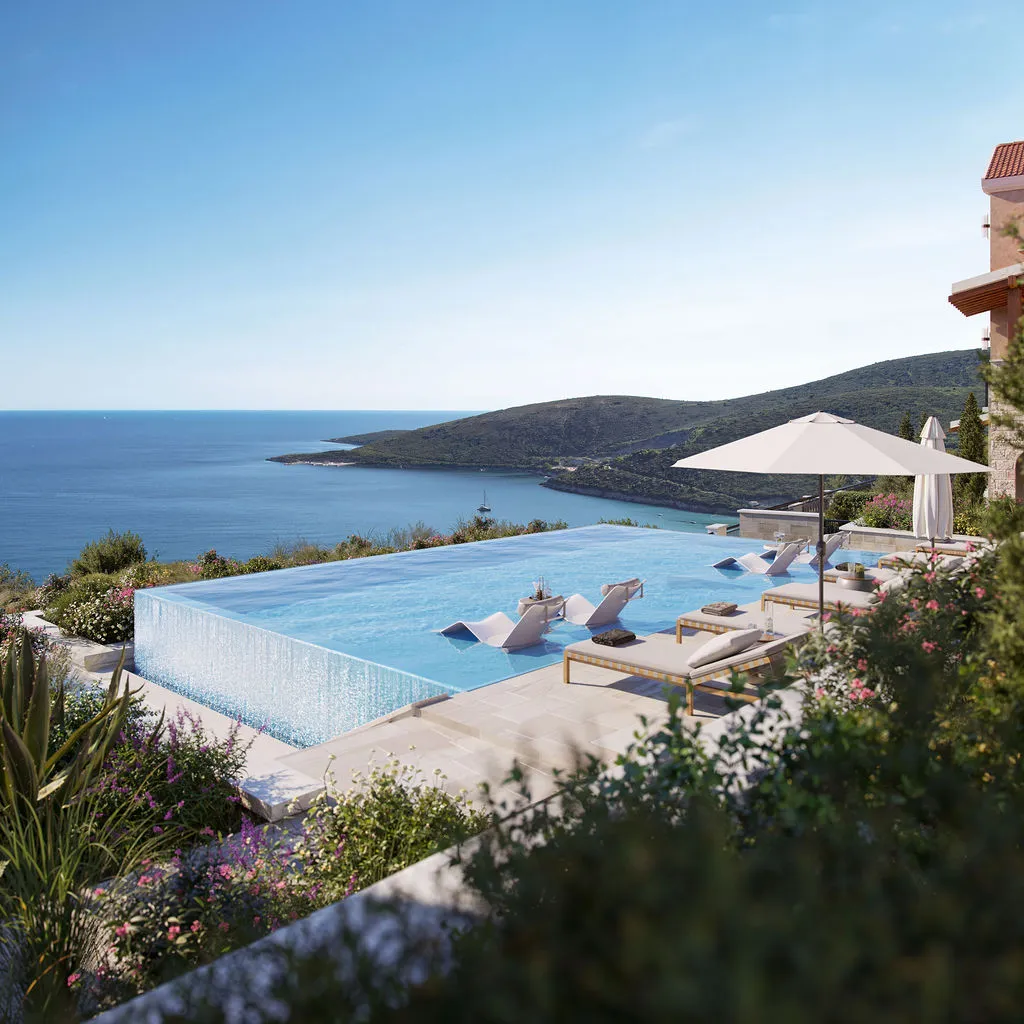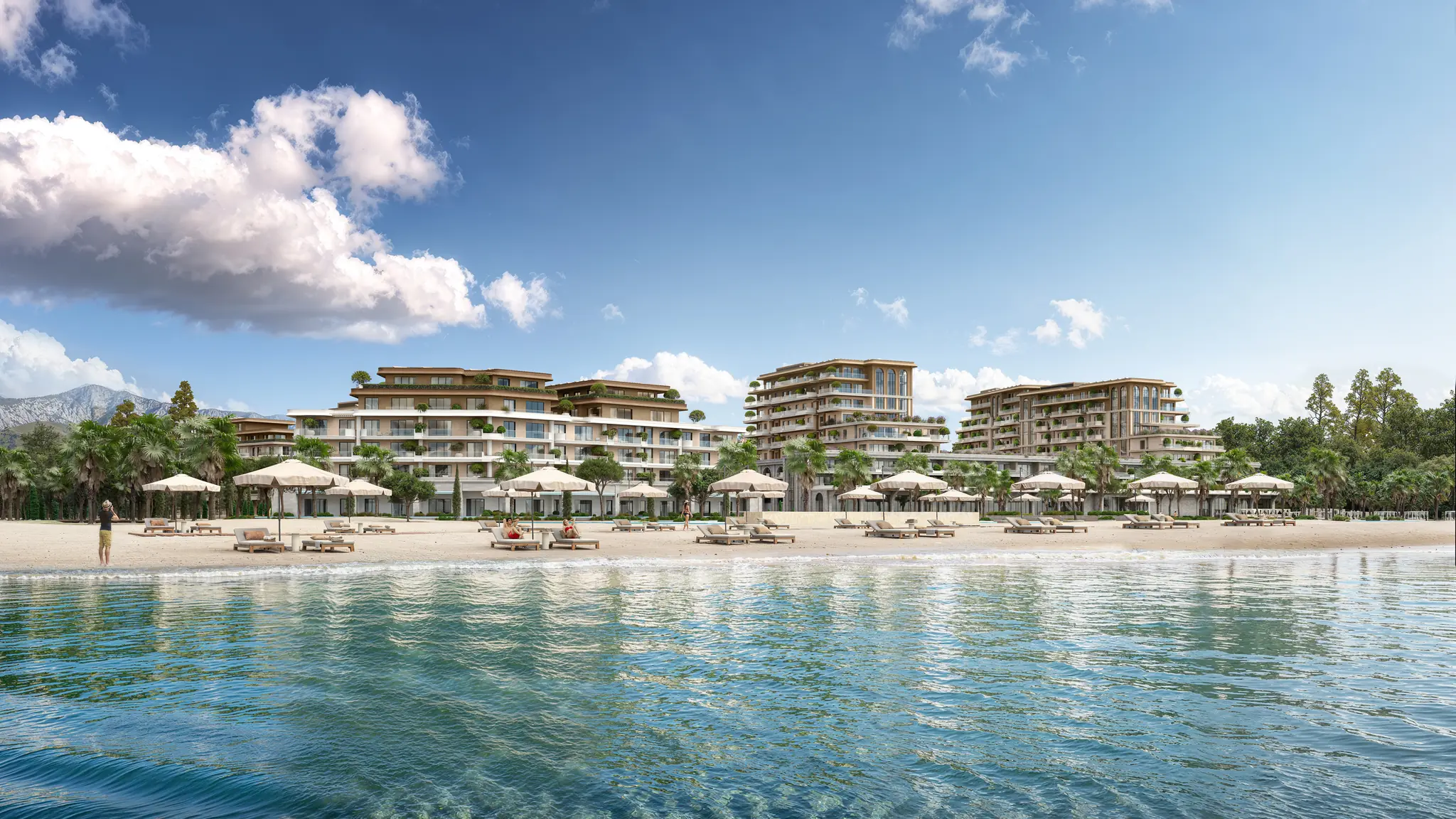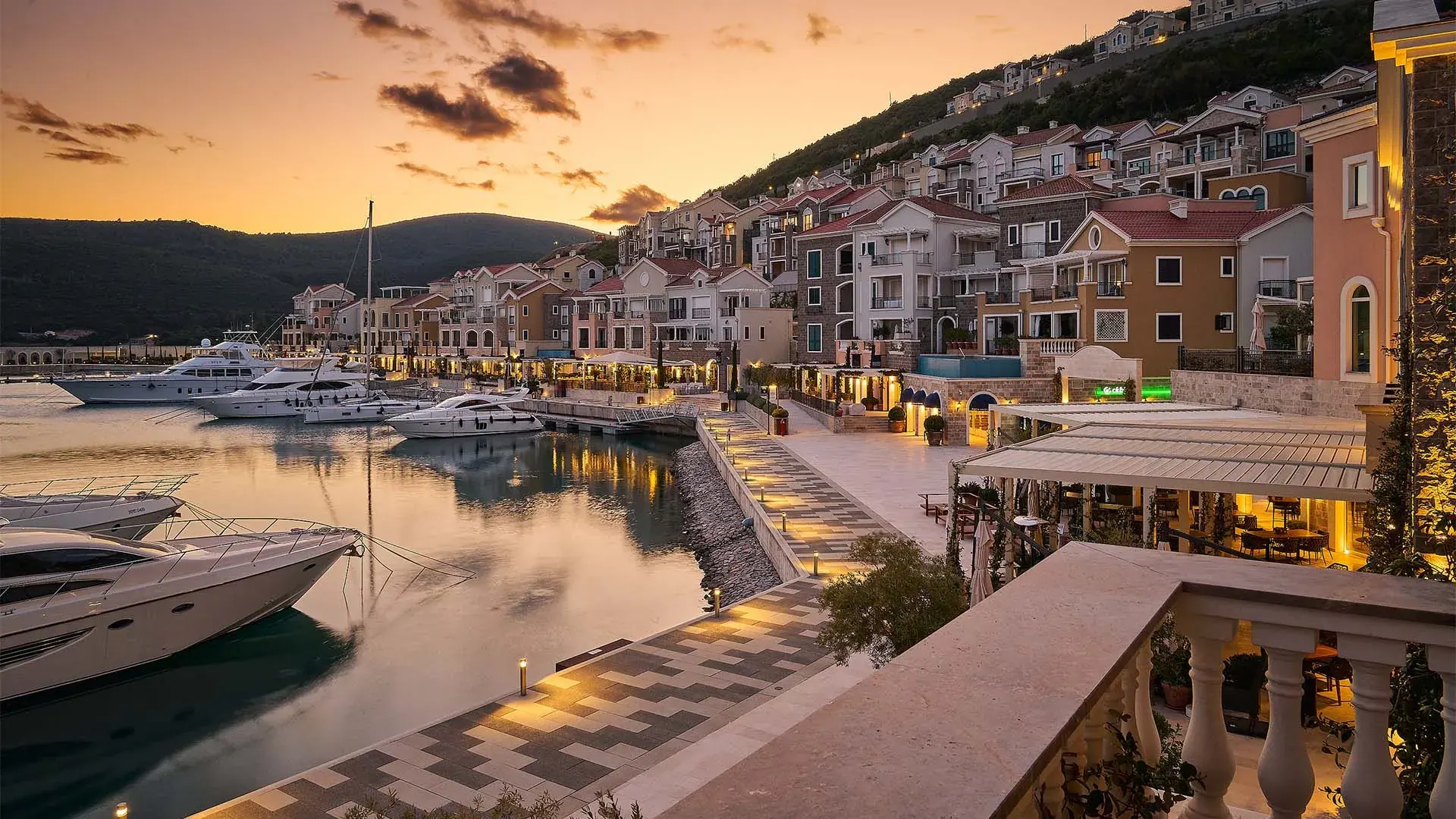
Montenegro works well for remote work on European hours. It runs on Central European Time, most fixed broadband lines are fibre, and 5G reaches the towns of the Bay of Kotor, Budva and Bar. What it does not give you automatically is the right to stay: visa-free visits are capped at 90 days in any 180, and a long stay can make you tax resident. Settle both before you plan a year around a home here.
Montenegro's time zone and your working day
Montenegro is on Central European Time, UTC+1, and moves to summer time, UTC+2, from late March to late October. In 2026 the clocks went forward on 29 March and back on 25 October; in 2027 the dates are 28 March and 31 October. You keep the same hours as colleagues in Berlin, Paris, Milan or Vienna, and run one hour ahead of London all year.
For teams in the Gulf or the Americas, the gap is the same as from any central European city, so a working pattern that suits you in Frankfurt suits you in Kotor or Tivat.
Home internet: how much of Montenegro has fibre
Fibre is now the most common fixed connection. At the end of September 2026 Montenegro had 213,562 fixed broadband connections, according to EKIP, the electronic communications regulator:
| Technology | Connections, September 2026 |
|---|---|
| Fibre to the home or building | 118,313 |
| Cable | 52,500 |
| VDSL | 26,931 |
| ADSL | 13,525 |
| Wireless and other | 2,293 |
Crnogorski Telekom sells fibre at up to 4 Gbps download and 1 Gbps upload, on a contract of at least 24 months. Where fibre does not reach an address, it offers turboDSL instead, so check which of the two you would get. Home broadband of 50 to 60 Mbps or more costs about EUR 27 to 30 a month in Podgorica and Budva on crowd-sourced price data.
Telecoms are not where Montenegro saves you money: Eurostat put information and communication at 106.1% of the EU price level in 2025, against 66.1% for household spending overall. See cost of living for the full picture.
Before you buy or sign a long lease, ask the operators to check the exact address for fibre, and for a new building, ask the developer which operator has connected it. A sea view does not help a video call.
Mobile data and 5G coverage
5G arrived in 2022, when Crnogorski Telekom and One launched it on existing bands. In 2023 all three networks, Telekom, One and m:tel, began using the 3.6 GHz band, and by the end of that year it was in service in the urban parts of Bar, Budva, Herceg Novi, Kotor, Nikšić, Podgorica and Tivat. At the same date, Telekom reported its 5G available in every municipality and to more than 80% of the population.
For your first working month, a tourist eSIM bought online before you travel has you connected on arrival:
| Crnogorski Telekom tourist eSIM, 30 days | Price |
|---|---|
| 1,000 GB | EUR 20 |
| Unlimited data, 1.5 TB fair use | EUR 25 |
| Unlimited data and calls to local networks | EUR 30 |
One sells similar packages at the same prices. A local SIM is also a simple way to test indoor signal on a viewing: check it in the room you would work in, not on the terrace. Phones, roaming and paperwork are covered in banking and daily life.
How long digital nomads can stay in Montenegro
Visa-free visitors can stay up to 90 days in any 180-day period, and who needs a visa depends on your passport. EU citizens can stay up to 90 days on a passport but only 30 on an ID card. Every stay must be registered within 24 hours of arrival: in your own home you do it yourself, with the police or the local tourist organisation. See visa-free entry and stays and the registration of stay entry.
Staying longer needs a residence permit, and Montenegro has one written for remote workers. Under the Law on Foreigners, as amended by Parliament on 31 December 2025, a temporary residence permit can be issued to a digital nomad who works electronically for a foreign company, or for their own company registered outside Montenegro. You must also meet the general conditions for temporary residence, including means of support, accommodation and health insurance. The permit lasts up to two years and can be extended by up to two more, and a new one can be issued only six months after the last expires. Your spouse and minor children can join you.
You can apply online, then give your photograph and fingerprints at the Ministry of Interior where you stay within ten days of entering Montenegro. Documents, fees and steps are on our digital nomad residence page. If you own property or run a company here, compare temporary residence through property and company and work residence. If you plan to take on clients in Montenegro, take advice first.
A home in Montenegro
Will you work?
Time in Montenegro
Your nationality
Family in Montenegro
Closest match
Montenegro visa-free stays: 90-day rule and 2026 changes
50
Fit out of 100
Why this route
You own or plan to buy a home worth EUR 150,000 or more, will not work and plan longer stays while based abroad, so this route is the closest fit: after a 90-day stay you can return once 180 days have passed since your first entry, and your passport allows entry without a visa.
The trade-off: each stay is capped at 90 days in a 180-day period.
- Stay
- Up to 90 days within 180 days of first entry for visa-free nationalities; 30 days on an EU, Swiss or Serbian identity card
- Cost
- Free for visa-free nationalities; registering through the local tourist organisation costs nothing
The other routes, ranked
A temporary residence permit can end if you spend more than 30 days outside Montenegro while it is valid.
- Montenegro digital nomad visa: income, tax and fees in 2026Not open on these answers
It is only for people who work online for an employer, or their own company, registered outside Montenegro.
- Montenegro residence and work permit: founders and staffNot open on these answers
It is for people who will work in Montenegro, through their own company or for an employer there.
- Family reunificationNot open on these answers
It needs a spouse who is a Montenegrin citizen or a foreigner with residence in Montenegro.
The programme expired on 31 December 2022. Only applications filed before then were still being processed.
Buying property does not by itself give a right to stay.
If you buy a new build, ask your lawyer how its value is proven for residence: it carries VAT, not transfer tax.
General guidance, not immigration advice. The fit scores are our reading of each route's published rules against your five answers, and they leave out documents, fees, income and health insurance tests. Rules change: check with the Ministry of Interior, or ask us.
Send me the ranking
Your answers and the routes ranked against them, by email. An adviser will talk you through the route and the homes that fit your plans.
Email me the ranking
Tax residence in Montenegro for remote workers
You are treated as tax resident in Montenegro if you spend at least 183 days of a tax year there, or if your home or the centre of your personal and economic interests is there. A remote worker who spends most of the year in a Montenegrin home can cross that line without noticing. Check how your home country treats the same days, whether a double taxation agreement applies, and take independent advice before you change your pattern. If you let the home while you are away, read rental income and tax.
Getting paid and paying bills in euros
Montenegro uses the euro, and payments have run through SEPA since October 2025. The central bank puts the average SEPA fee at EUR 5.71, against EUR 73.40 for a SWIFT payment, so moving euros between your account at home and a local one is cheap. Opening a local account is covered in banking and daily life.
Choosing a base: Podgorica or the coast
Podgorica is the capital, with its own airport and central rents about a fifth below central Budva's. The coast gives you the sea: Tivat, Kotor and Herceg Novi on the Bay of Kotor, Budva on the open Adriatic and Bar to the south. Flight links in winter matter more to a remote worker than to a holiday owner, so read flights and getting around and climate and seasons before you choose. The area matchmaker scores each district on the things you weigh.
A remote worker's checklist before you buy
- Fibre to the building, confirmed for the exact address.
- Mobile signal tested indoors with a local SIM.
- A residence route that fits how long you will stay.
- Your tax position in Montenegro and at home.
- A room you can close the door on, away from the street and the pool.