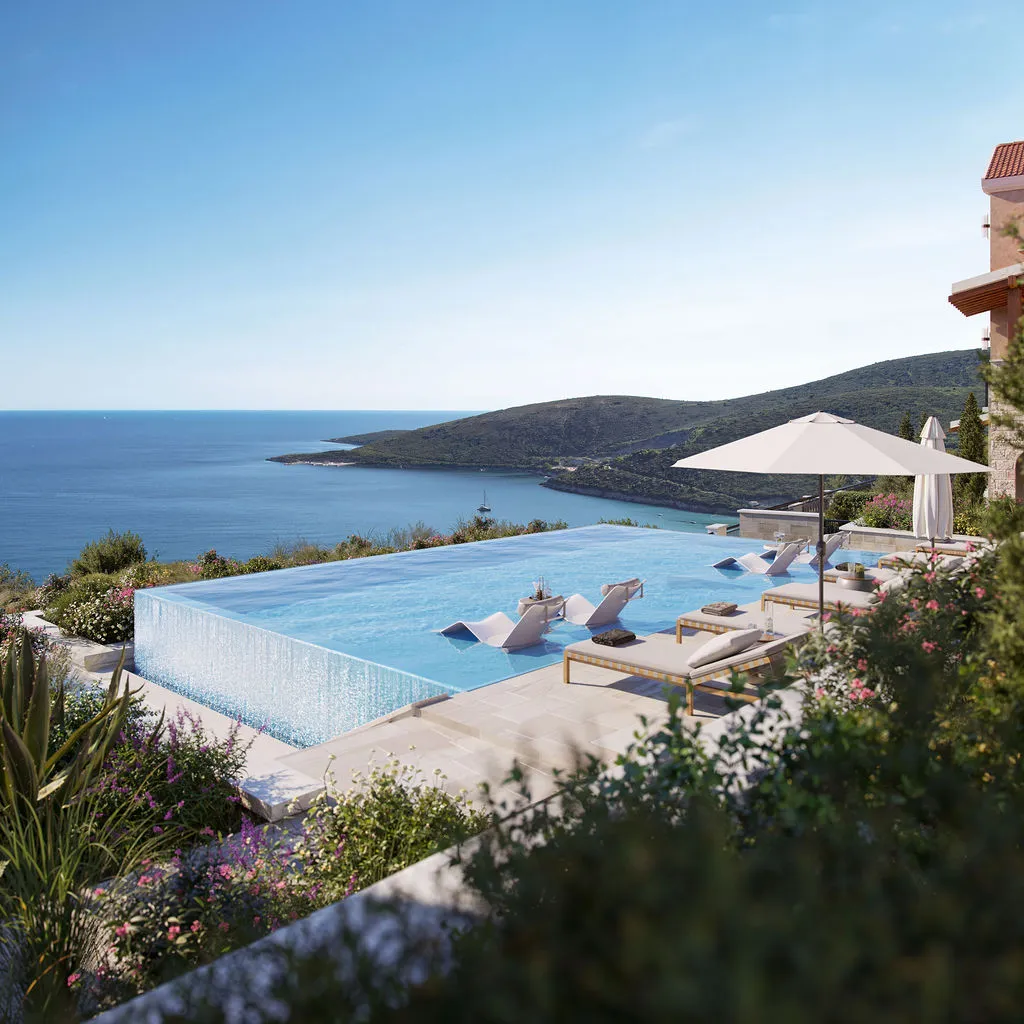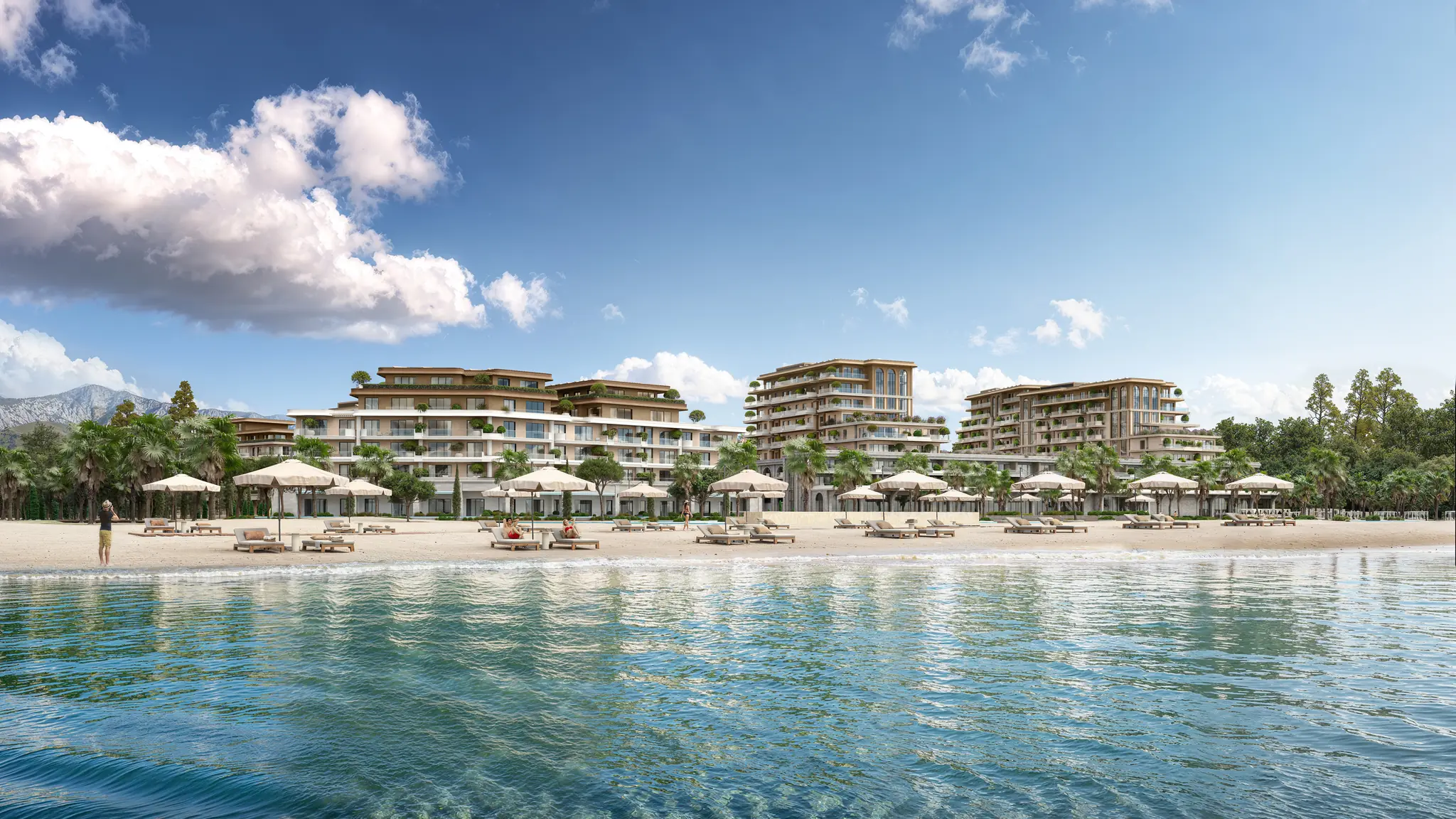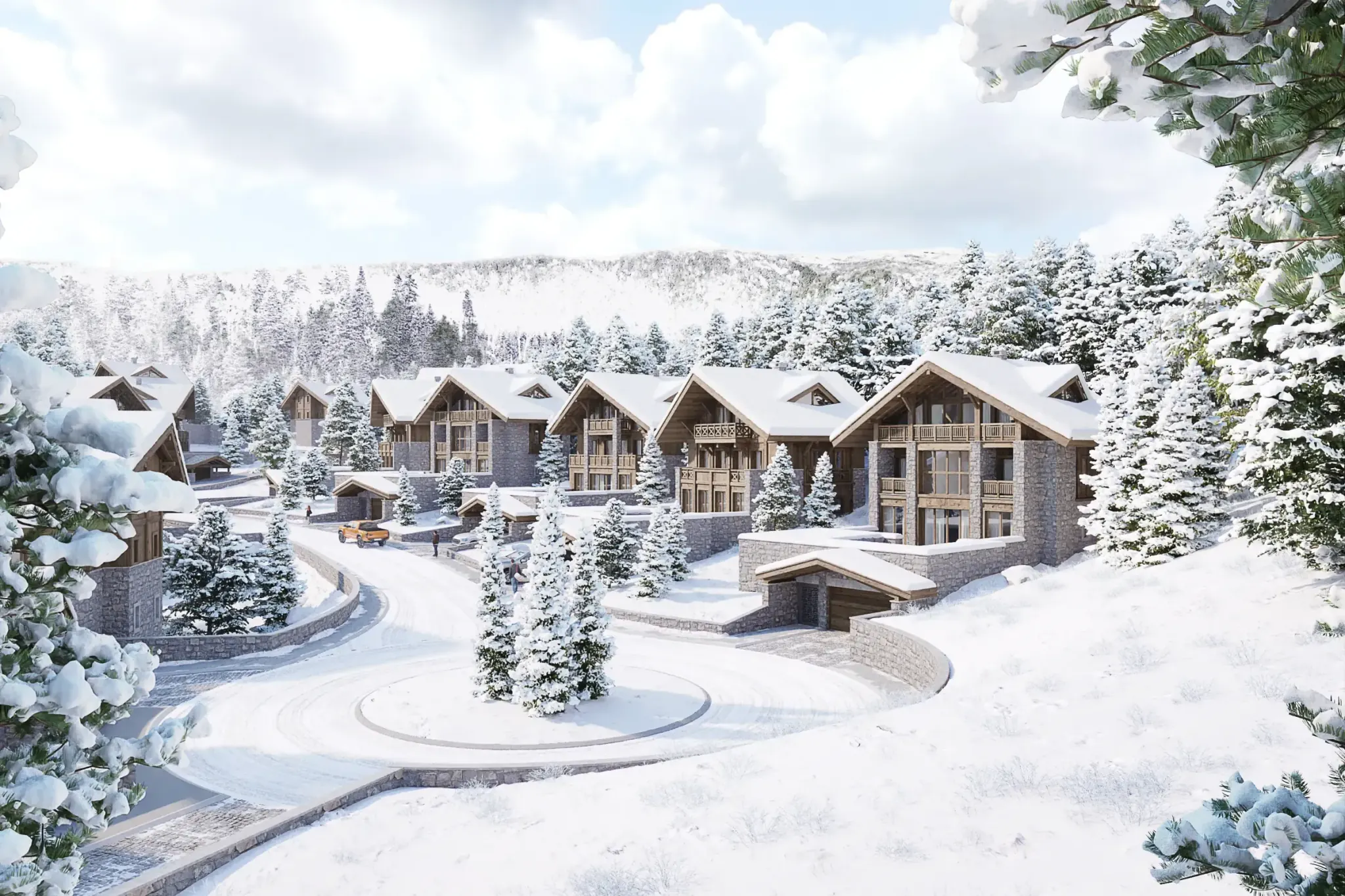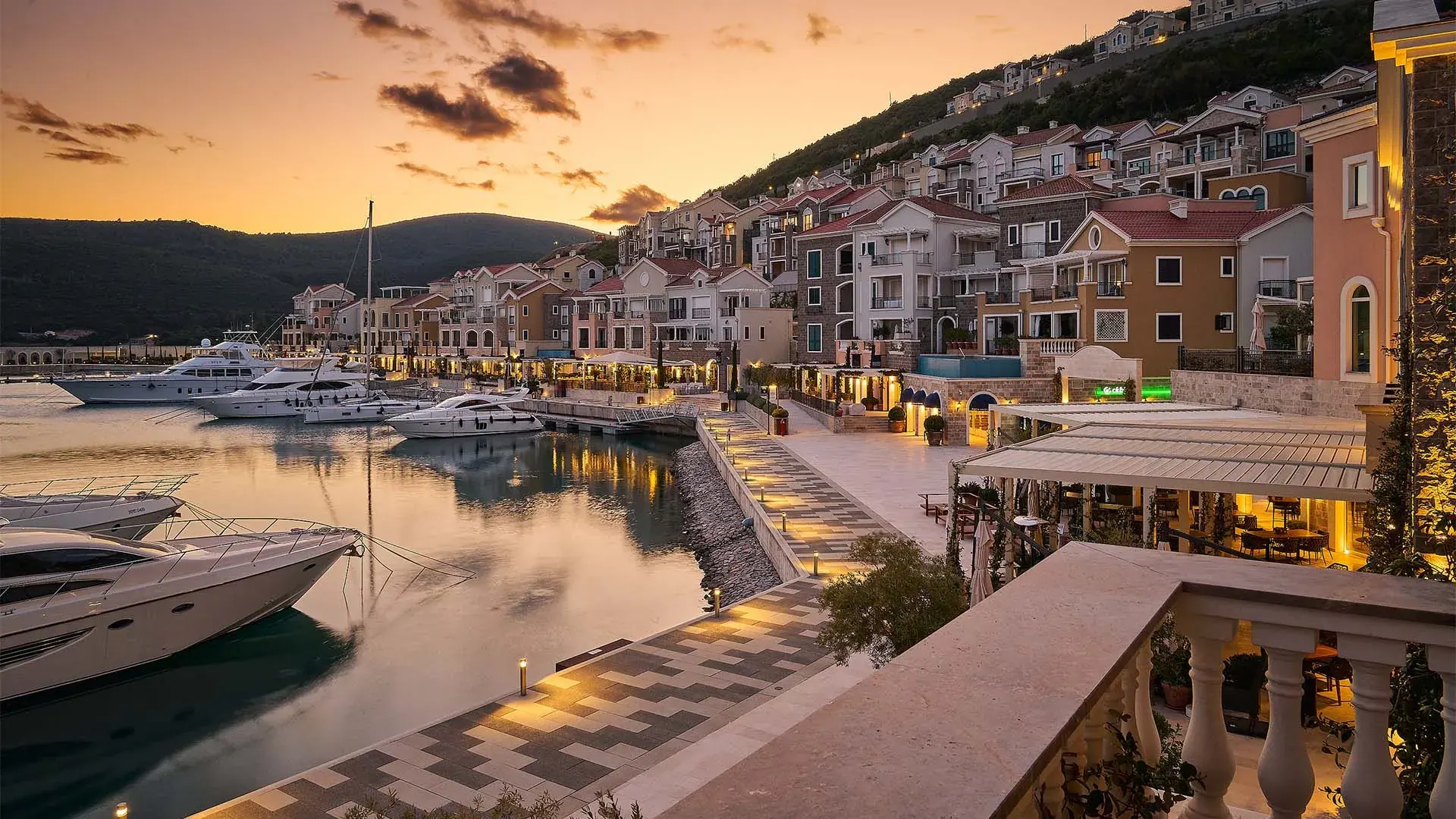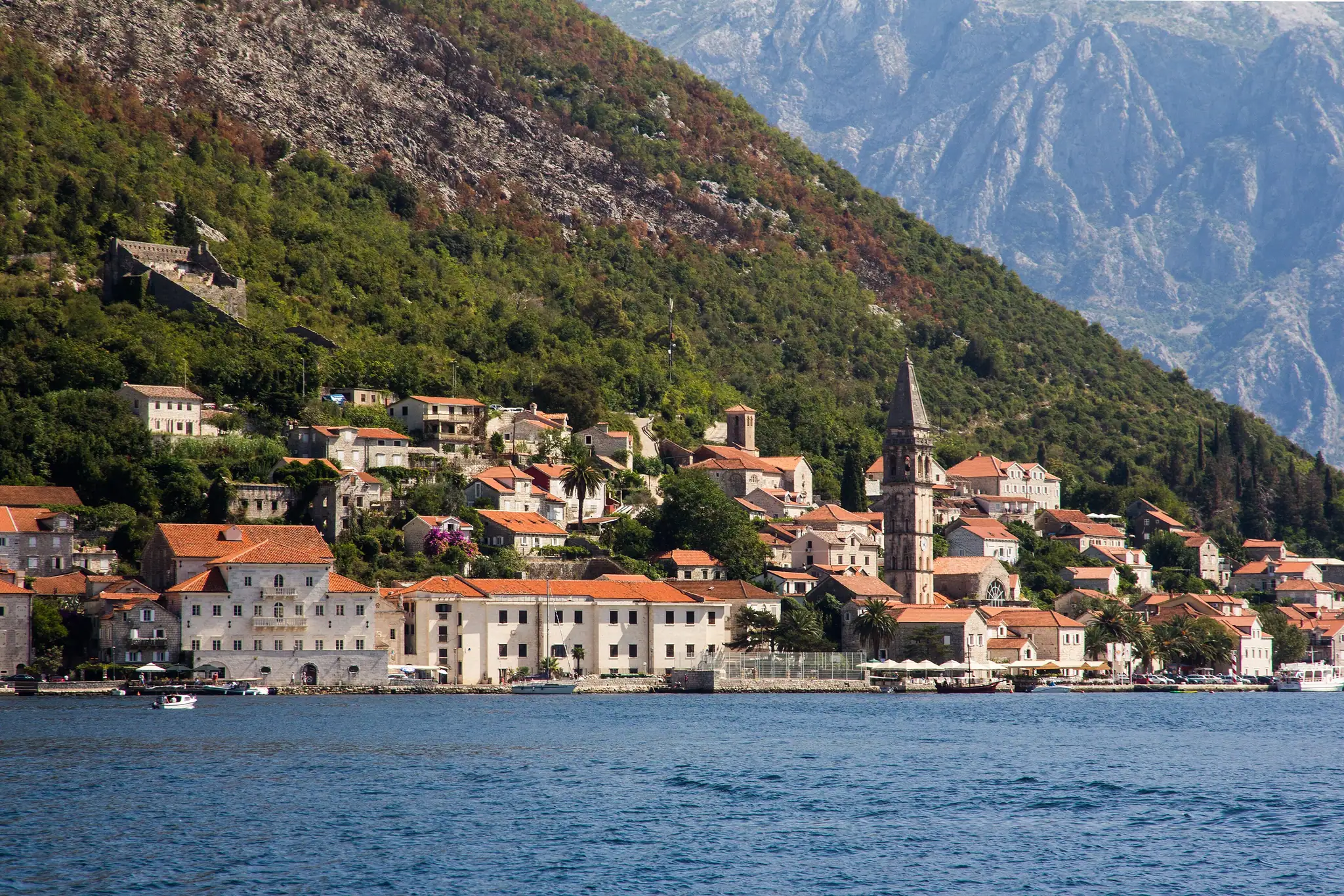
Montenegro fits three climates into a small country. The coast is Mediterranean, with hot, dry summers and mild, wet winters. Podgorica, on the plain behind the coastal mountains, is hotter in summer and colder at night in winter. The northern mountains, about 50 km from the sea, have proper winters with snow. For a buyer, the climate decides when you will use a home, how it should be built and fitted, and when it will let.
Montenegro's three climates, station by station
The government's 2020 climate report names three dominant climate types: maritime, continental and mountain. Yearly rainfall ranges from about 800 mm in the far north to about 5,000 mm in the far south-west. The table gives the 1991 to 2020 averages for six weather stations.
| Station | Average high, August | Average low, January | Rain and snow a year | Days of 30 °C or more |
|---|---|---|---|---|
| Herceg Novi | 31.7 °C | 4.8 °C | 1,794 mm | 59 |
| Bar | 30.4 °C | 5.5 °C | 1,355 mm | 46 |
| Ulcinj | 31.3 °C | 3.6 °C | 1,289 mm | 52 |
| Podgorica | 34.5 °C | 2.2 °C | 1,693 mm | 90 |
| Kolašin | 25.9 °C | -5.1 °C | 2,057 mm | 11 |
| Žabljak | 22.1 °C | -7.4 °C | 1,505 mm | 1 |
Of the three coastal stations, Bar has the mildest winter nights and Herceg Novi the hottest August afternoons. In 2025, Budva recorded the highest mean temperature in the country, 19 °C, and Žabljak the lowest, 7.7 °C, according to the Environmental Protection Agency.
Rain on the coast: wet winters, dry summers
Rain on the coast is seasonal. In Herceg Novi, at the mouth of the Bay of Kotor, 58% of the yearly 1,794 mm falls between October and February, while July averages 39 mm. It tends to arrive in heavy bursts rather than drizzle: Herceg Novi has 101 days a year with at least 1 mm of rain, and 51 of them bring 10 mm or more. The south is drier, with 1,355 mm a year in Bar and 1,289 mm in Ulcinj.
The hills behind the bay are another matter. Crkvice, at 937 m on the slopes of Mount Orjen in the Krivošije district, averaged 4,593 mm a year from 1961 to 1990, with 1,703 mm in winter alone. A 2012 study in Natural Hazards and Earth System Sciences records this as the highest average annual precipitation found in Europe and calls Krivošije the wettest region of the Mediterranean. The government's 2020 climate report notes that Crkvice can receive up to 7,000 mm in a year.
What this means for an owner in the bay, from Risan to Herceg Novi: see a house in November as well as in July. Check for damp, ventilation, roof drainage and the slope above the plot, and budget for dehumidifiers and upkeep. The running costs guide sets out what to allow each year.
Sunshine and the swimming season on the coast
Summer on the coast is long and bright. Bar records about 2,520 hours of sunshine a year and Ulcinj about 2,540, from 110 to 120 hours in December to about 350 in July, on the Institute of Hydrometeorology and Seismology's records. July is both the sunniest and the driest month.
The National Tourism Organisation counts a swimming season of 180 days, from May to October. Average highs on the coast are about 24 °C in May and 27 °C in September, so the shoulder months suit owners who want the beach without the August crowds. The sea warms more slowly than the air. The table gives the range between the monthly averages of seatemperature.info (ten years to November 2026) and Weather Atlas:
| Month | Sea temperature off Budva |
|---|---|
| January to March | About 14 °C |
| April | 15 to 16 °C |
| May | 18 to 19 °C |
| June | 21 to 23 °C |
| July | 24 to 26 °C |
| August | 25 to 26 °C |
| September | 23 to 24 °C |
| October | 20 to 21 °C |
| November | 17 to 19 °C |
| December | 15 to 16 °C |
On both sets of averages the sea is at 20 °C or more from June to October. Our guide to the beaches of Montenegro covers where to swim.
Summer heat in Podgorica
Podgorica and the Zeta valley have the hottest summers in Montenegro, the government's climate report notes. The capital's average August high is 34.5 °C; it reaches 30 °C or more on 90 days a year and 35 °C or more on 34, and the record is 44.8 °C, set in August 2007. Winters are cooler than on the coast, with an average January low of 2.2 °C and 22 nights of frost a year. Buy with air conditioning, external shutters and a shaded terrace in mind.
Recent years have run warm. The Environmental Protection Agency places 2025 among the ten warmest years recorded in Montenegro: Podgorica averaged 18.2 °C, 1.3 °C above its 1991 to 2020 normal.
Winter in Kolašin and Žabljak, and the ski season
Kolašin, at 954 m, and Žabljak, at 1,450 m, have long winters. Average January lows are -5.1 °C in Kolašin and -7.4 °C in Žabljak, with frost on about 119 and 152 nights a year. The government's climate report says snow cover forms at altitudes above 400 m, and that snow deeper than 50 cm lasts on average 10 days in Kolašin and 76 days in Žabljak.
The ski areas sit well above the towns: the main lift at Kolašin 1600 tops out at 2,035 m. The National Tourism Organisation points visitors to January to March for the snow, and Kolašin 1600 counted 77 ski days in the 2025/26 season. Our skiing guide covers the lifts, passes and mountain property, and Kolašin or Žabljak compares the two towns.
Summer in the mountains is the cool alternative. Žabljak's average July high is 21.4 °C and Kolašin's 25.3 °C, against 33.9 °C in Podgorica. The mountains are wet, though: Kolašin averages 2,057 mm of rain and snow a year, more than any coastal station, on 128 days.
The tourist season and letting income
Visitors follow the sun, and so does rental income. Monstat's monthly figures for 2025 add up to 15.37 million tourist nights in all types of accommodation. July and August held 45.6% of them, and June to September 69%. August, with 3.63 million nights, had about ten times as many as January. Provisional figures for the first nine months of 2026 are 9% above the same months of 2025.
For a holiday home that lets, that means a short peak, two shoulder seasons and a quiet winter on the coast. The season explorer shows the year month by month. Before you count on income, read the short-term rental rules and rental yields in Montenegro, and see buying a holiday home.
Choosing where to live in Montenegro by climate
- Mild winters. Bar has the warmest January nights of the coastal stations, 5.5 °C on average, and Budva had the country's highest mean temperature in 2025.
- Green and wet. The Bay of Kotor and Herceg Novi get the most winter rain on the coast. Visit in the wet season before you buy.
- Long, dry summers. Ulcinj is the driest coastal station, with 1,289 mm a year and about 2,540 hours of sunshine.
- The capital. Podgorica suits buyers who need the city, schools or work there, with 90 days a year at 30 °C or more.
- Snow and cool summers. Kolašin and Žabljak, for skiing in winter and walking in summer.
The area matchmaker weighs climate alongside beaches, schools and value, and the holiday home planner shows what your chosen months cost and what letting the rest could cover.
Your months in the home
The cost of keeping it
The months you are away
Each night of your own stay costs
€67
The year's net cost spread over your 60 nights.
In 2025, July and August held 43% of the year’s hotel nights on the coast. Your own months are June and September.
Rent covers
0%
Of the running costs, after fees and tax.
Net cost a year
€4,000
Running costs less net rent.
- Running costs
- −€4,000
- Your net cost a year
- −€4,000
In short
You stay 60 nights and each of your nights costs EUR 67.
An estimate from your own figures, not a forecast of rent; the starting figures are placeholders. It leaves out the money tied up in the purchase. The hotel nights are Monstat’s 2025 monthly figures for collective accommodation. Before the first guest, the municipality must enter the home in the Central Tourist Register, and the host registers each foreign guest with the police within 12 hours of arrival. See short-term rental rules and buying a holiday home.
Sources for these figures
- Monstat: tourist arrivals and overnight stays in collective accommodation, monthly releases for 2025
- Monstat: collective accommodation, August 2025 (release 145-2/2025)
- Law on Tourism and Hospitality, Articles 73, 77 and 100: registering a home before letting it (consolidated text)
- Law on Foreigners, Articles 97 and 99: the host registers foreign guests with the police (consolidated text)
- PwC Worldwide Tax Summaries: Montenegro, income determination (reviewed 7 August 2026)
- PwC Worldwide Tax Summaries: Montenegro, taxes on personal income (reviewed 7 August 2026)
- Government of Montenegro: do I need a visa for Montenegro?
Talk it through
We can point you to homes that suit your months: those in a resort with its own rental programme, and those where you would let through a local manager.
Send me this plan
Your months, rent and costs by email, with an adviser's view of the homes that fit how you will use one.
Email me the plan
Homes that suit the months you spend in Montenegro
Tell us which months you plan to spend in Montenegro, and we will suggest the areas and homes that fit.