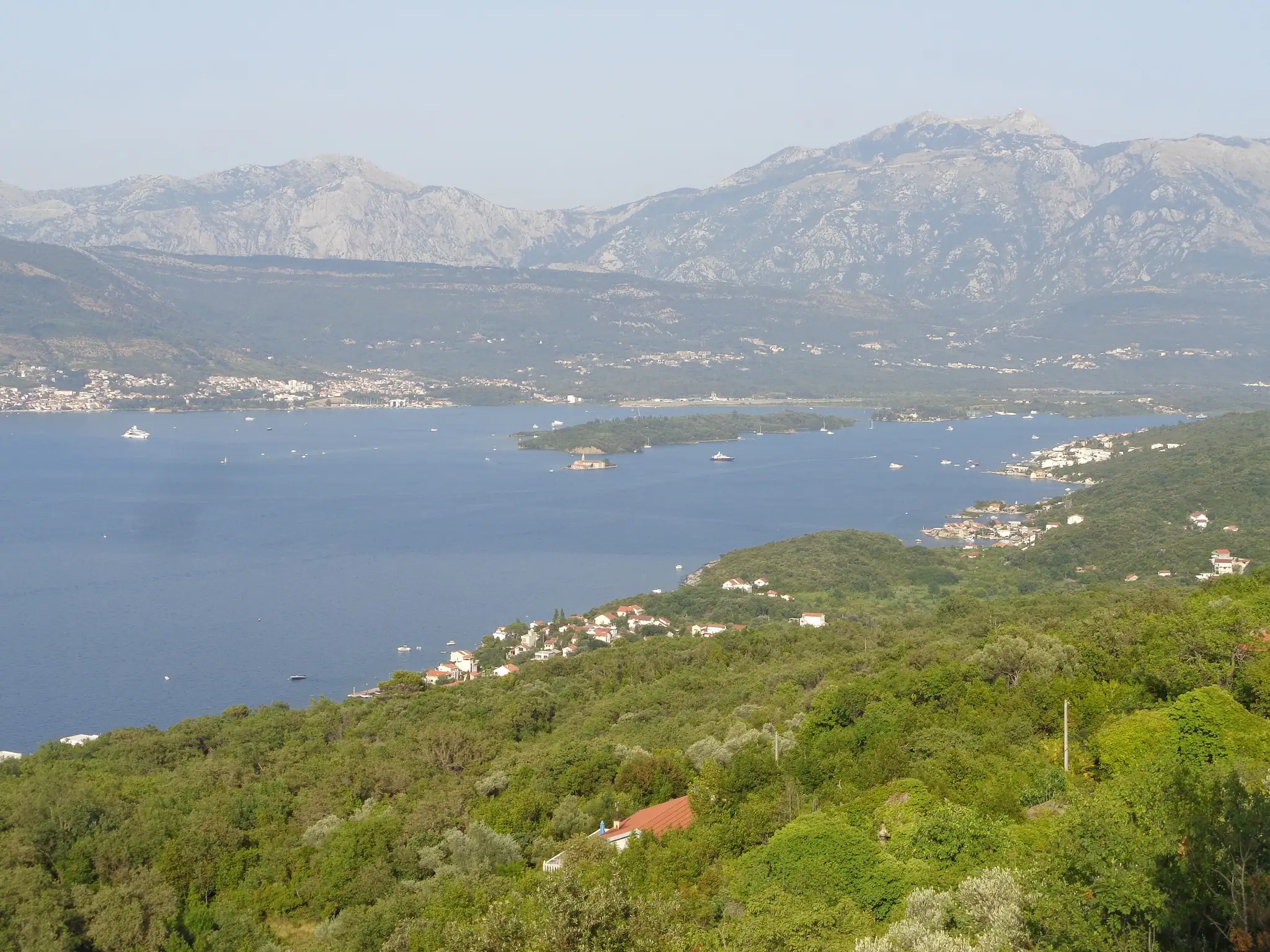
A foreigner can buy a building plot in Montenegro outright, in their own name, and build a house on it with a building permit. What you cannot buy is agricultural land, forest or forest land, except for a narrow exception for individuals buying up to 5,000 m² with a house already on it. So the first question for any plot is how its land is classed, and the second is what the planning documents allow you to build.
What land a foreigner can buy in Montenegro
| Land | Can a foreigner own it? | Notes |
|---|---|---|
| Building plot | Yes | Check its designated use in the plan |
| Agricultural land | No | Up to 5,000 m² for an individual, only with a residential building on it |
| Forest and forest land | No | The same exception as agricultural land |
| Land within 1 km of the land border, or on islands | No | Long-term lease or concession possible |
On the coast, also check whether the cadastre records a note of the sea coast or the public maritime domain against the parcel. For the restricted categories a foreigner may hold a long-term lease or a concession on the same terms as a Montenegrin. Lawyers writing in the Chambers Real Estate 2026 guide say a company registered in Montenegro may acquire real estate without restriction; if you intend to rely on that for land, take independent legal advice first. Our guide to can foreigners buy property in Montenegro sets out the rules in full.
How to check a building plot: the cadastre and the plan
Two records decide whether a plot suits you.
The title sheet. Its A sheet describes each cadastral parcel, including the use class of the land; the B sheet names the owners and their shares; and the G sheet records mortgages, easements, disputes and notes, including a building started without a permit. See title deeds and due diligence.
The planning documents. The urban-planning and technical conditions for a parcel are published by the Ministry on its Geoportal. They state the parcel's designated use, the building and regulation lines, the maximum number of floors or height, the permitted floor area and the indices of building and coverage, parking, and any need for geological surveys. A plot without conditions that allow a house is not a building plot, whatever the advertisement says.
The planning documents for a building plot
Since the Law on Spatial Planning of 2025, municipalities again draft, adopt and implement their own local plans. The documents are:
| Level | Document | Adopted by |
|---|---|---|
| State | Spatial Plan of Montenegro | Parliament |
| State | Special purpose spatial plans, obligatory for the coastal area and the national parks | Government |
| State | State detailed regulation plan | Government |
| Local | Spatial-urban plan of the municipality, obligatory | Municipality |
| Local | Local detailed regulation plan | Municipality |
| Local | Urban project | Municipality |
Third parties generally have no formal right to object during the permit procedure, but the public can take part while plans are prepared. Projects in protected natural areas or heritage zones need extra approvals from specialised authorities.
Getting a building permit in Montenegro
Under the Law on Construction of Structures of 2025, the municipality issues building permits for most buildings. The Ministry issues them for buildings of 3,000 m² gross area or more, and for four and five-star hotels, tourist settlements and resorts.
The sequence for a house:
- Planning conditions from the Geoportal for your parcel.
- Conceptual design, approved by the chief city architect, or by the chief state architect for larger buildings, within 30 days of the request.
- Main design, with the designers' liability insurance.
- Building permit, due within 30 days of a complete application, or 60 days where an environmental impact assessment is needed or the site is a UNESCO area. The authority publishes it on its website.
- Construction, which must start within two years of the permit, or the right to build lapses.
- Use permit, issued within seven days of the technical inspection report, then registration of the building in the cadastre.
A family residential building, meaning a house of up to 300 m² of net area for the investor's household, follows a simpler route: designers' statements replace the review of the main design, and a contractor's statement replaces the technical inspection.
What are you buying?
Where is it?
How will you hold it?
What is it for?
Likely structure
Your answers decide what appears here.
Answer any of the four questions, in any order. This sheet then sets out how a foreign buyer can hold that property, what it means in practice, the points to take care over and the guides to read next.
What you will see
- What a foreign buyer can and cannot own
- How the answer changes with the land, the place and the holder
- What your plans for the home add
General guidance, not legal advice. Take independent legal advice before you commit.
The costs of buying land and building
| Cost | How it is set |
|---|---|
| Transfer tax on the plot | 3% to 6% of market value, paid by the buyer, where VAT does not apply |
| VAT on the plot | 21% on building land with a building permit, from 1 April 2026 |
| Notary | Official tariff, from EUR 180 to a ceiling of EUR 8,000, plus VAT |
| Building fee | Per m² of net area, set by the municipality with the government's consent |
| Regional water supply fee | A special fee for investments on the coast, required for the permit |
| Design, review and supervision | Quotes from licensed firms |
The building fee pays for the basic servicing of building land. A municipality may reduce it by up to 50% for a family home, and by up to 20% for payment in one sum, and the law raises it by 20% in the zone of the public maritime domain and in national parks. Since 1 April 2026, a plot with a building permit carries VAT rather than transfer tax, and the VAT law now treats even occasional sellers of building land as taxable persons: see VAT or transfer tax on new builds.
Risks to check before you buy land
- Classification. Part of the plot may be agricultural or forest land in the cadastre.
- Access and boundaries. The access road, the boundaries and the area on site may not match the cadastre.
- Owners. Every registered co-owner or heir must sign the sale.
- Planning. The conditions may not allow the house you have in mind, or a plan may be under revision.
- The coast and protected areas. Extra approvals, and a higher building fee in the maritime domain zone.
- Unauthorised structures. An old building on the plot may lack permits: see illegal construction and legalisation.
A lawyer checks the title and the plan, and a licensed geodetic surveyor checks the boundaries on site. Montenegrin property law has grey areas around land, so take independent legal advice before you pay a deposit on any plot. If you would rather buy a finished home, see current developments.