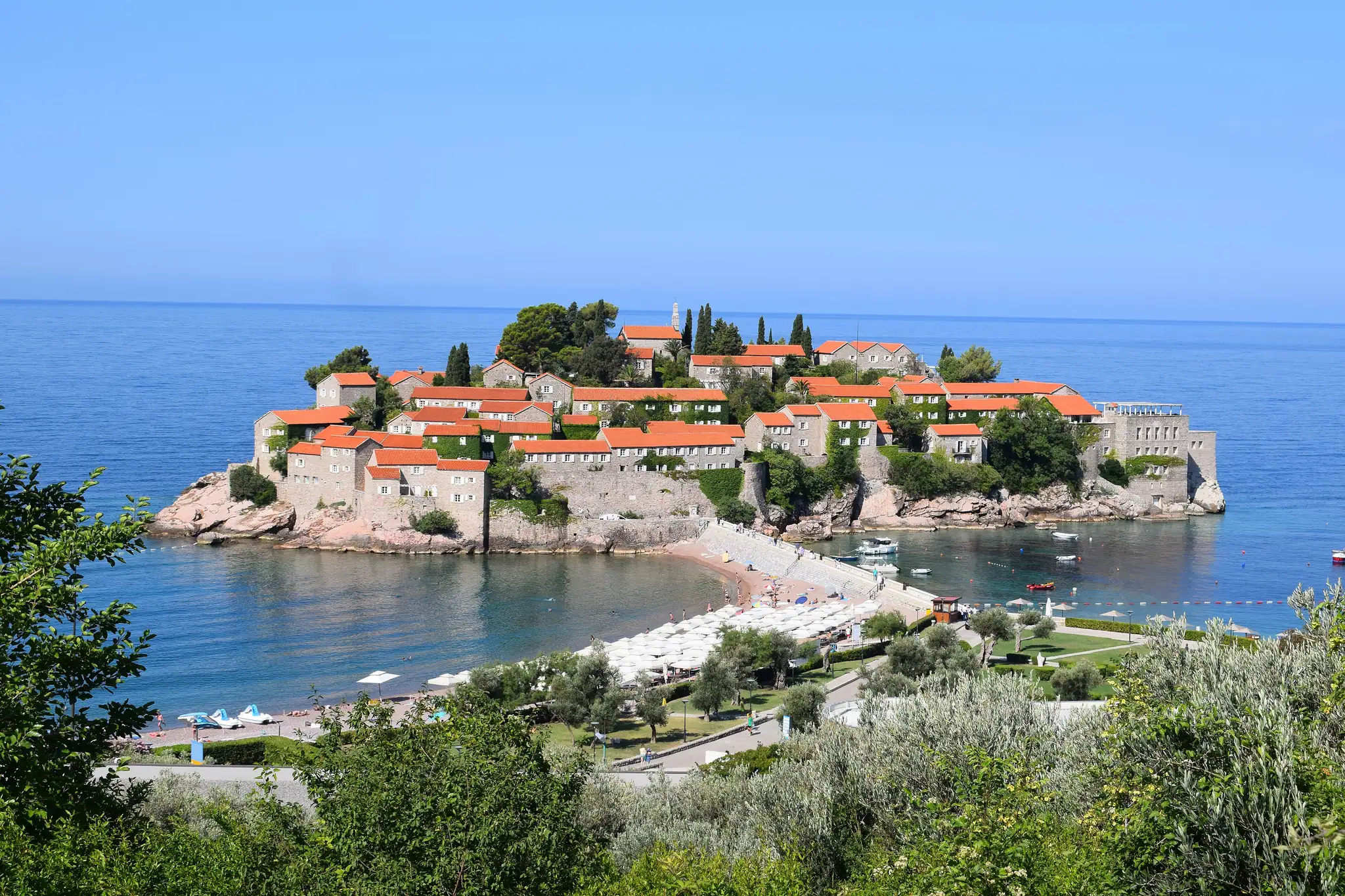
Montenegro's citizenship by investment programme is closed. The government created it by a decision of November 2018, for applications from 1 January 2019. Its end date was extended once, and the last day for applications was 31 December 2022. No golden visa has replaced it. An investor who wants to live in Montenegro now uses temporary residence, which is not citizenship.
When the citizenship by investment programme ran
| Date | What happened |
|---|---|
| 22 November 2018 | The government adopts the decision on the special investment programme (Official Gazette 79/2018), to apply from 1 January 2019 to 31 December 2021 |
| 20 February 2020 | The Investment Agency of Montenegro becomes the body that runs it |
| 30 December 2021 | The end date moves to 31 December 2022, and a EUR 100,000 Innovation Fund deposit is added |
| 23 June 2022 | New rules on bank guarantees for projects and on children born during an application |
| 31 December 2022 | Last day for applications |
| 2024 | 1,282 citizenship decisions on earlier applications, with 21 still pending |
What the citizenship programme required
Under the 2018 decision, as amended, an applicant:
- paid procedure fees of EUR 15,000 for themselves, EUR 10,000 for each of up to four family members and EUR 50,000 for each further member;
- deposited EUR 100,000 in escrow for the development of less developed municipalities;
- from 31 December 2021, deposited a further EUR 100,000 for Montenegro's Innovation Fund;
- deposited at least EUR 450,000 for investment in an approved development project in Podgorica or the coastal region, or at least EUR 250,000 in the northern or central region;
- had no prison sentence of more than one year, and passed checks by a licensed due diligence agent, including proof of the source of funds.
Approved projects were on government lists. In tourism they were hotels or mixed complexes: five stars on the coast or in Podgorica, with at least EUR 15 million of investment, 80 staff and 60 units, or four stars in the north or centre, with at least EUR 5 million, 25 staff and 35 units. Agriculture and manufacturing projects could also qualify. Applications went through licensed agents, and the decision allowed at most 2,000 applications to be approved. The family covered a spouse, dependent children over 18 and children under 18.
How a citizenship application worked
- The applicant applied through a licensed agent, for themselves and their family, with passports, civil status records and health insurance valid in Montenegro.
- A licensed due diligence agent checked the applicant, including the origin of the money.
- The body running the programme reported to the Prime Minister, and the Ministry of Interior confirmed that the conditions for admission were met.
- Only then did the money leave escrow, to the regional development account and to the account of the company building the approved project, with an independent auditor checking each payment.
- On the auditor's report, the Ministry of Interior issued the decision admitting the family to citizenship.
The decision also set the penalty for false information: citizenship could be withdrawn, with no refund of the money paid.
The programme was never a property purchase in the ordinary sense. The money went into listed projects and state funds, through escrow, and the criteria included no requirement to live in Montenegro.
Why Montenegro closed the programme
The European Commission states that investor citizenship schemes breach EU law and pose risks related to security, money laundering, tax evasion, terrorist financing, corruption and infiltration by organised crime. Its Montenegro 2025 report asks Montenegro to repeal the legal basis that would allow a scheme to be developed again, to run security checks on the applications still pending, and to revoke citizenship granted to people under international restrictive measures.
Montenegro is negotiating to join the EU: by 6 November 2026 it had opened all 33 negotiating chapters and provisionally closed 23. European Affairs Minister Maida Gorčević has named 2028 as the government's target for membership; it is a target, not an agreed date. See EU accession and property.
What investors can use now instead of a golden visa
- Residence through property. A temporary residence permit for owners, issued for up to a year and renewed on the same basis. Since 17 January 2026, applicants from outside the EU, the EEA and Switzerland need a home with a transfer tax base of at least EUR 150,000. It gives no right to work. See temporary residence through property.
- EU citizens investing in a company. Since 27 October 2026, an EU entrepreneur or company owner who invests at least EUR 250,000 in a Montenegrin company, or deposits it in escrow for an approved venture, can get a residence and work permit for up to three years, extendable for three more.
- Residence through your own business. A residence and work permit as the director of your own Montenegrin company. See residence through a company or work.
- The long road to citizenship. Permanent residence after five years of continuous temporary residence, then naturalisation after ten years of lawful residence, with basic Montenegrin and release from your other citizenship. See permanent residence and citizenship.
A home in Montenegro
Will you work?
Time in Montenegro
Your nationality
Family in Montenegro
Closest match
Montenegro visa-free stays: 90-day rule and 2026 changes
50
Fit out of 100
Why this route
You own or plan to buy a home worth EUR 150,000 or more, will not work and plan longer stays while based abroad, so this route is the closest fit: after a 90-day stay you can return once 180 days have passed since your first entry, and your passport allows entry without a visa.
The trade-off: each stay is capped at 90 days in a 180-day period.
- Stay
- Up to 90 days within 180 days of first entry for visa-free nationalities; 30 days on an EU, Swiss or Serbian identity card
- Cost
- Free for visa-free nationalities; registering through the local tourist organisation costs nothing
The other routes, ranked
A temporary residence permit can end if you spend more than 30 days outside Montenegro while it is valid.
- Montenegro digital nomad visa: income, tax and fees in 2026Not open on these answers
It is only for people who work online for an employer, or their own company, registered outside Montenegro.
- Montenegro residence and work permit: founders and staffNot open on these answers
It is for people who will work in Montenegro, through their own company or for an employer there.
- Family reunificationNot open on these answers
It needs a spouse who is a Montenegrin citizen or a foreigner with residence in Montenegro.
The programme expired on 31 December 2022. Only applications filed before then were still being processed.
Buying property does not by itself give a right to stay.
If you buy a new build, ask your lawyer how its value is proven for residence: it carries VAT, not transfer tax.
General guidance, not immigration advice. The fit scores are our reading of each route's published rules against your five answers, and they leave out documents, fees, income and health insurance tests. Rules change: check with the Ministry of Interior, or ask us.
Send me the ranking
Your answers and the routes ranked against them, by email. An adviser will talk you through the route and the homes that fit your plans.
Email me the ranking
If someone offers you citizenship for money
Since the end of 2022 there has been no investment programme through which Montenegrin citizenship can be acquired. Exceptional admission under Article 12 of the citizenship law is a discretionary decision about a person whose citizenship serves a special state, scientific, economic, cultural or sporting interest; it is not a product with a price. If an agent offers a Montenegrin passport in return for a purchase or a fee, do not pay, and take independent legal advice.
Buying a home in Montenegro for its own sake
Montenegro remains open to foreign buyers. You can own an apartment or a house in your own name, and the home can support an application for residence. Read what foreigners can buy and how to buy property in Montenegro, then browse current developments in places such as Luštica Bay, Tivat and Budva.