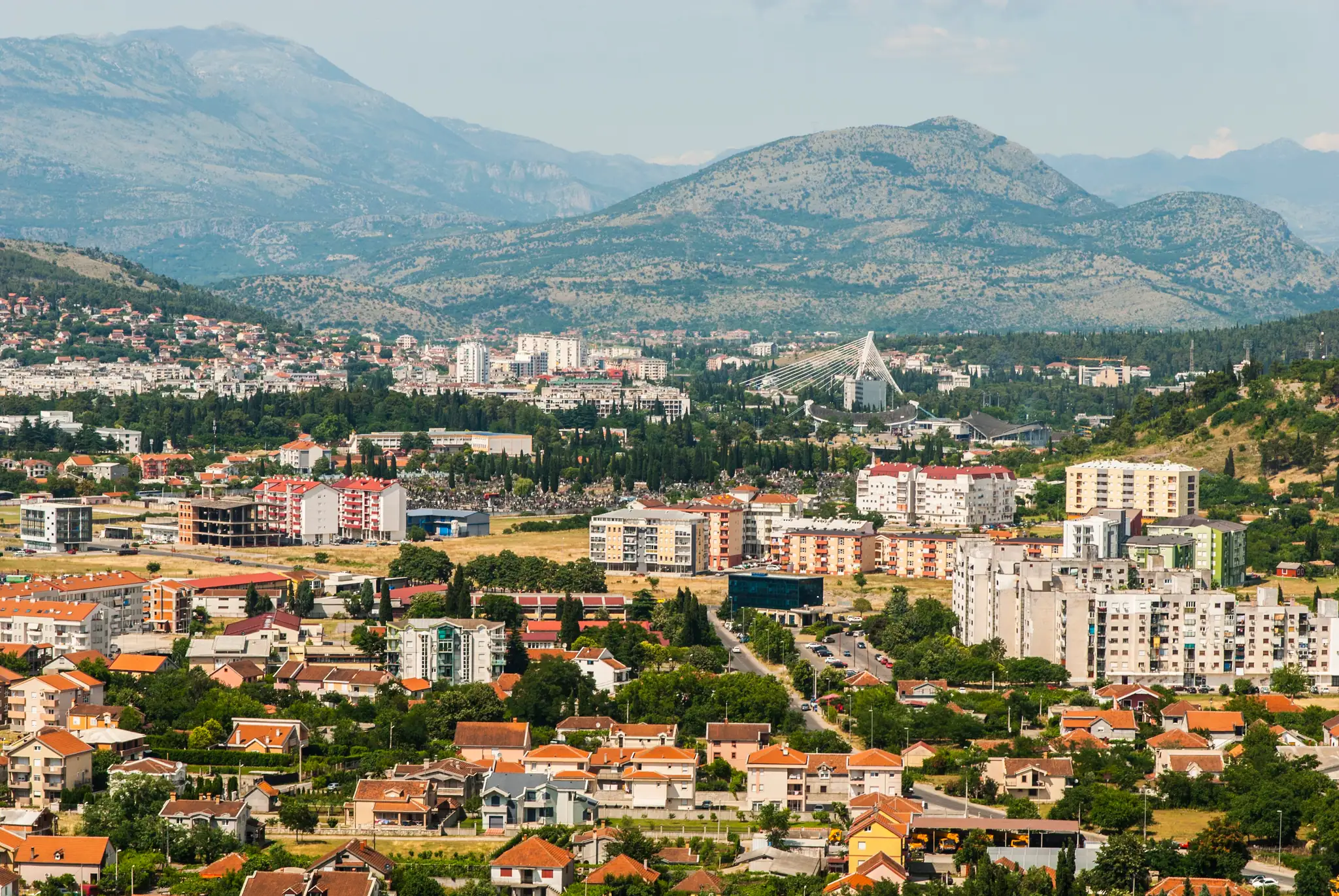
Five years of temporary residence open the door to permanent residence in Montenegro, and ten years of lawful residence to citizenship by naturalisation. Both stages need basic Montenegrin. Since 17 January 2026, permanent residence also needs proof that you paid your taxes while you held temporary residence. Citizenship usually means giving up your other citizenship, and it is no longer available for an investment.
Permanent residence after five years
Under Article 86 of the Law on Foreigners, you can apply once you have lived in Montenegro lawfully and continuously for five years on temporary residence.
- Continuous. Absences from Montenegro of up to ten months in total, or one absence of up to six months, do not break the five years.
- Study and training. Time on a permit for schooling, specialisation or training counts at half.
- Exceptions. Permanent residence can be granted after less than five years for humanitarian reasons or where it is in Montenegro's interest.
- Status on the day. You must hold temporary residence when you apply.
The five years are measured on your permits, so keep them unbroken. Renew each temporary permit in its window, 60 to 30 days before it expires, and remember that a temporary permit itself ends after more than 30 days outside Montenegro.
Which years count towards permanent residence
Here the law and the government's guidance differ. The law counts temporary residence on any basis, with only study time reduced. The government's English guidance on gov.me lists permits for study, for using property you own, and for seasonal or seconded work as time that does not count. If you hold a property permit, ask the Ministry of Interior to confirm in writing whether your years will count before you plan on them.
A digital nomad permit gives at most four years in one run, and a new one only six months after the last expires, so a nomad who wants permanent residence needs another basis in time. Work permits, through your own company or an employer, and family reunification permits count in the ordinary way.
Conditions for permanent residence
Under Article 88, as amended in 2026, you need:
| Condition | What it means in practice |
|---|---|
| Travel document | A valid foreign passport |
| Means of subsistence | Stable, regular and sufficient income |
| Health insurance | Cover that applies in Montenegro |
| Accommodation | Your own title, or a lease |
| Montenegrin | Enough for basic communication |
| Taxes | Proof your tax obligations were met during temporary residence |
The permit is refused where national security requires it. The language test does not apply if you are over 65, if you completed primary, secondary or higher education in Montenegro, or if you are a citizen of a state that emerged from the former Yugoslavia. Since January 2026 the government designates the body that sets and runs the test.
Applying for permanent residence
You apply in person at the Ministry of Interior office for the place where you live, on the prescribed form, and give your photograph, two fingerprints and signature. The security agency and the police give their opinion within 60 days, and the Ministry decides within six months of a complete application. A refusal can be challenged in an administrative dispute before the courts. The administrative fee is EUR 60.
What permanent residence gives you
Permanent residence is granted for an indefinite period. The card is issued for five years, or two for a child under four, and you apply to renew it from 60 days before it expires. It gives you the right to work and to help finding work, to education and the recognition of diplomas, to social assistance, health and pension insurance, to tax reliefs under the relevant laws, and to the market in goods and services.
It ends if you move away or live in another country continuously for more than a year, among other grounds. Since January 2026, proven humanitarian reasons can prevent that. Our page on healthcare explains how permanent residence opens the state health scheme.
Citizenship by naturalisation after ten years
Article 8 of the Law on Montenegrin Citizenship admits a foreigner who:
- is 18 or over;
- has been released from any other citizenship;
- has lived in Montenegro lawfully and continuously for ten years before applying;
- has accommodation and a steady income that gives material and social security;
- has no prison sentence of more than one year, in Montenegro or elsewhere, for an offence prosecuted by the state;
- speaks Montenegrin well enough for basic communication;
- raises no security or defence objection;
- has settled their tax and other legal obligations.
Release is not required if you are stateless, or if you show that your own country's law ends your citizenship when you become Montenegrin. If you need time to arrange your release, you can ask for a guarantee, valid two years, that you will be admitted once you are released.
The spouse of a Montenegrin citizen can apply after three years of marriage and five years of lawful, continuous residence. Since 19 August 2026 the same applies to a same-sex life partner. Admission without the usual conditions is possible only exceptionally, where it serves a special state, scientific, economic, cultural or sporting interest. The fee for the decision is EUR 100.
A realistic timeline to Montenegrin citizenship
| Year | Step |
|---|---|
| 0 | First temporary permit: as an owner, a digital nomad, an employee or a family member |
| 1 to 5 | Renew on time, keep every tax receipt, learn Montenegrin |
| 5 | Apply for permanent residence, once you know your years count |
| 10 | Apply for citizenship, with release from your other citizenship |
A home in Montenegro
Will you work?
Time in Montenegro
Your nationality
Family in Montenegro
Closest match
Montenegro visa-free stays: 90-day rule and 2026 changes
50
Fit out of 100
Why this route
You own or plan to buy a home worth EUR 150,000 or more, will not work and plan longer stays while based abroad, so this route is the closest fit: after a 90-day stay you can return once 180 days have passed since your first entry, and your passport allows entry without a visa.
The trade-off: each stay is capped at 90 days in a 180-day period.
- Stay
- Up to 90 days within 180 days of first entry for visa-free nationalities; 30 days on an EU, Swiss or Serbian identity card
- Cost
- Free for visa-free nationalities; registering through the local tourist organisation costs nothing
The other routes, ranked
A temporary residence permit can end if you spend more than 30 days outside Montenegro while it is valid.
- Montenegro digital nomad visa: income, tax and fees in 2026Not open on these answers
It is only for people who work online for an employer, or their own company, registered outside Montenegro.
- Montenegro residence and work permit: founders and staffNot open on these answers
It is for people who will work in Montenegro, through their own company or for an employer there.
- Family reunificationNot open on these answers
It needs a spouse who is a Montenegrin citizen or a foreigner with residence in Montenegro.
The programme expired on 31 December 2022. Only applications filed before then were still being processed.
Buying property does not by itself give a right to stay.
If you buy a new build, ask your lawyer how its value is proven for residence: it carries VAT, not transfer tax.
General guidance, not immigration advice. The fit scores are our reading of each route's published rules against your five answers, and they leave out documents, fees, income and health insurance tests. Rules change: check with the Ministry of Interior, or ask us.
Send me the ranking
Your answers and the routes ranked against them, by email. An adviser will talk you through the route and the homes that fit your plans.
Email me the ranking
Planning your residence around the rules
Where the government's English guidance differs from the law, as it does on property permits, ask the Ministry for written confirmation and keep it with your papers. Three habits protect the five years: renew every permit in its window, keep absences within the limits, and keep proof of every tax payment, including the annual property tax on your home.
A home you own is your proof of accommodation at every stage. If you are buying with long-term residence in mind, see how to buy property in Montenegro, browse our developments, and compare places to live, from the capital, Podgorica, to Tivat and Herceg Novi on the Bay of Kotor. If you came for an investment shortcut, see why citizenship by investment is closed.