Skip to content
Montenegro
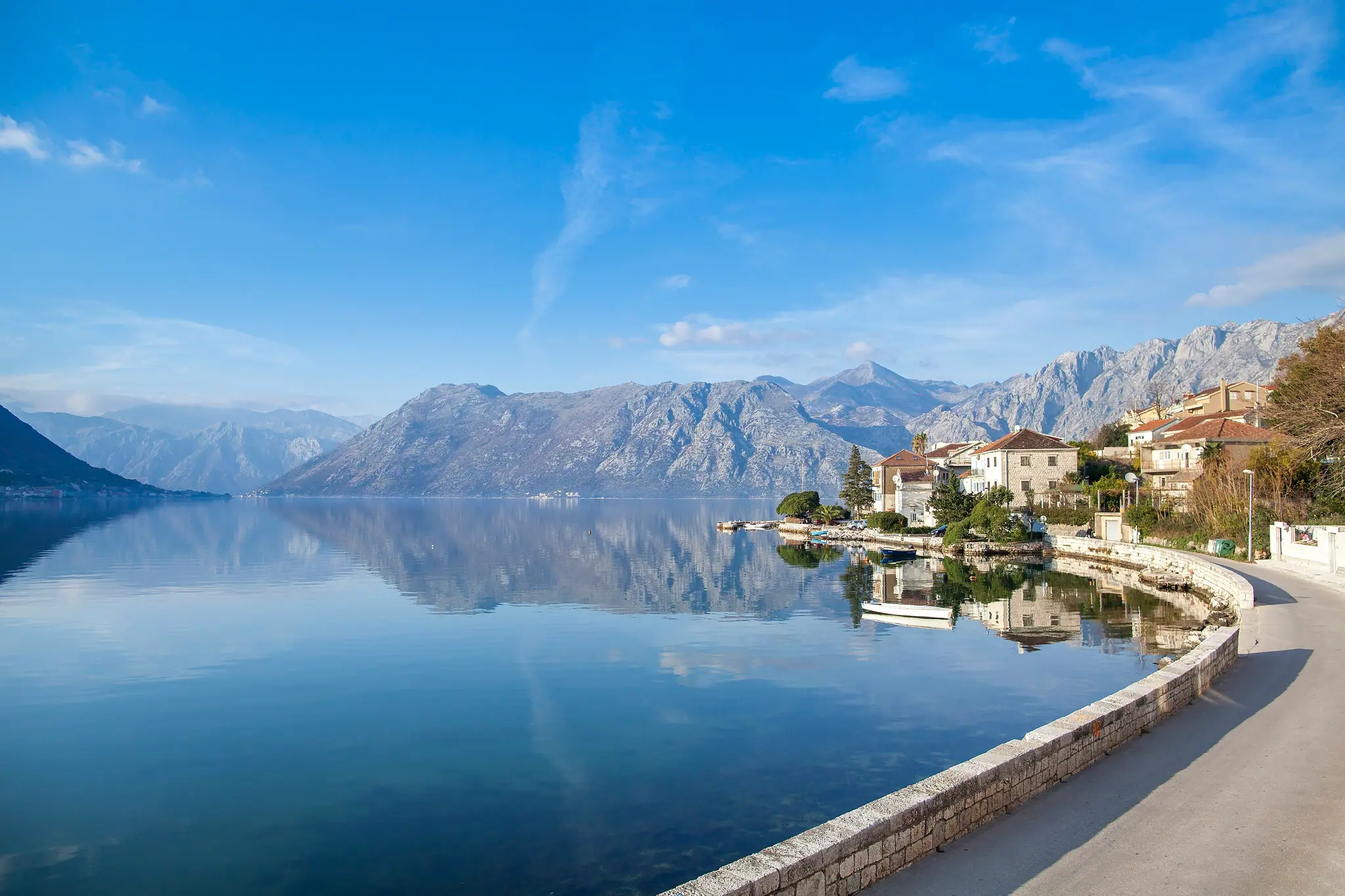
Stone houses along the waterfront promenade at Dobrota, with the still Bay of Kotor and the mountains beyondPhoto: Pipiwok, CC BY-SA 4.0

Montenegro property glossary

46 Montenegrin property terms, explained.

Title, land and permits

Agricultural landpoljoprivredno zemljište
Agricultural land is land used or designated for farming. Under Montenegro's Law on Property Relations foreigners may not own it, except that a foreign individual may buy up to 5,000 square metres of agricultural or forest land together with a house standing on it.
Building permitgrađevinska dozvola
A building permit (građevinska dozvola) is the official approval that allows construction of a building to begin. In Montenegro it is issued by the municipality or, depending on the size and type of the project, by the competent ministry.
Building ploturbanistička parcela
A building plot is land that a spatial planning document designates for construction. In Montenegro the plan sets it out as an urban plot (urbanistička parcela), which can take in one or more cadastral parcels and comes with rules on what may be built.
Cadastral parcelkatastarska parcela
A cadastral parcel (katastarska parcela) is a piece of land within a cadastral municipality, defined by its boundaries and identified by a number in Montenegro's real estate cadastre. Together, the parcel number and the cadastral municipality identify the land.
Encumbrancetereti i ograničenja
An encumbrance is a right or restriction that burdens a property in favour of someone other than its owner, such as a mortgage, an easement or a long-term lease. In Montenegro encumbrances are recorded on the G list of the title sheet.
Legalisationlegalizacija
Legalisation (legalizacija) is the procedure by which a building put up in Montenegro without the permits it needed, or not in line with them, is regularised so that its ownership can be registered. A 2025 law, amended in 2026, governs the process.
Public maritime domainmorsko dobro
The public maritime domain (morsko dobro) is Montenegro's state-owned coastal zone: the coast and its beaches, the sea, the coasts of islands and part of the bank of the river Bojana. It cannot pass into private ownership, and its use is granted for fixed periods by contract.
Real estate cadastrekatastar nepokretnosti
The real estate cadastre (katastar nepokretnosti) is Montenegro's single public register of land, buildings and separate parts of buildings, and of the rights in them. A buyer becomes the owner only when entered in it.
Title sheetlist nepokretnosti
The title sheet (list nepokretnosti) is the official extract from Montenegro's real estate cadastre. It shows a property's land parcels, buildings and flats, who holds rights in them and in what share, and any mortgages or other encumbrances.
Use permitupotrebna dozvola
A use permit (upotrebna dozvola) is the official confirmation, given after a technical inspection, that a finished building may be used for its intended purpose. Under Montenegro's current rules a building may be used only once it has one, although a contractor's statement suffices for a family house.

Ownership

Co-ownershipsusvojina
Co-ownership (susvojina) is ownership of one undivided property by two or more people, each holding a share expressed as a fraction, such as 1/2. In Montenegro the shares are registered on the title sheet, and a co-owner who sells their share must first offer it to the other co-owners.
Company ownership
Company ownership means holding Montenegrin property through a company, Montenegrin or foreign, instead of in your own name. Foreign individuals can own most property directly, so a company is a choice made for business, tax or succession reasons, not a legal requirement.
Freeholdpravo svojine
Freehold is full ownership of property with no time limit. In Montenegro it is the right of ownership (pravo svojine) registered in the real estate cadastre, which foreign individuals and companies can hold in their own name, apart from a few restricted categories of property.
Leaseholddugoročni zakup
Leasehold is a right to use property for a fixed term under a lease, while ownership stays with the landowner. In Montenegro a foreigner can usually own a home outright, so long-term leases matter mainly where the law bars ownership, such as agricultural land or forest.
Reciprocity
Reciprocity is the principle that a country grants foreigners a right, such as buying property, only where their own country grants the same right in return. In Montenegro, the main limits on foreign buyers are set by category of land, such as agricultural land, and apply whatever the buyer's nationality.
Separate part of a buildingposeban dio zgrade
A separate part of a building (poseban dio zgrade) is a flat, business premises, garage, garage space or basement registered in Montenegro's real estate cadastre as a unit in its own right, which can be owned, sold and mortgaged on its own.

Tax and fees

Annual property taxporez na nepokretnosti
Annual property tax (porez na nepokretnosti) is the yearly tax that Montenegro's municipalities charge the owners of land and buildings. Each municipality sets its own rate, generally between 0.25% and 1% of the property's market value.
Capital gains taxkapitalni dobitak
Capital gains tax in Montenegro is personal income tax at 15% on the gain an individual makes when selling property: the sale price minus the price at which they acquired it. The sale of the owner's only and main residence is exempt.
Double taxation agreement
A double taxation agreement is a treaty between two countries that decides which of them may tax an income, such as rent or a gain on property, and how the other gives relief. Montenegro applied 44 such treaties as at 1 November 2025.
Inheritance and gift tax
Inheritance and gift tax in Montenegro applies only where real estate is inherited or given, at rates of 3% to 6%, the same as real estate transfer tax. Inheritances and gifts of movable assets, such as cash or shares, are not subject to it.
Notary fees
Notary fees are what a Montenegrin notary charges for drawing up and certifying a property contract as a notarial deed. They follow the official notary tariff, are calculated on the property's value, and are usually paid by the buyer.
Real estate transfer taxporez na promet nepokretnosti
Real estate transfer tax (porez na promet nepokretnosti) is the tax a buyer pays on acquiring property in Montenegro, other than on the first sale of a new building, which carries VAT instead. Since 1 January 2024 it is charged in bands of 3%, 5% and 6% of the market value.
Tax residencyrezident
Tax residency decides whether Montenegro taxes your income from anywhere in the world or only what you earn there. You are tax resident if your domicile or the centre of your business and personal interests is in Montenegro, or if you stay more than 183 days in a calendar year.
Tourist taxboravišna taksa
Tourist tax (boravišna taksa) is the charge a guest pays for a stay in tourist accommodation in Montenegro. The host collects it, must display its amount with the prices and must show the tax collected on the guest's invoice.
VAT on new buildsporez na dodatu vrijednost
In Montenegro the first sale of a newly built home carries VAT at 21% instead of real estate transfer tax, while resales pay transfer tax. Since 1 April 2026 the sale of building land that has a building permit also carries VAT.

The buying process

Court interpretersudski tumač
A court interpreter (sudski tumač) is an officially authorised interpreter and translator in Montenegro. If you do not understand Montenegrin, one must attend when a notary draws up your property contract, and the notary records that the deed was translated.
Due diligence
Due diligence is the set of legal and technical checks made before a purchase: who owns the property, what burdens it, whether its buildings were lawfully built and approved for use, and what may be built. In Montenegro, where title insurance is generally not used, these checks are a buyer's main protection.
Notarynotar
A notary (notar) is the official who draws up and certifies legal documents in Montenegro. Every contract transferring ownership of real estate must be made as a notarial deed, which the notary drafts, explains to the parties and then submits for registration in the cadastre.
Power of attorneypunomoćje
A power of attorney (punomoćje) is a document by which you authorise someone, such as your lawyer, to act for you, for example to sign a property contract in Montenegro. Under Montenegrin law it must take the form required for the contract it is used for.
Preliminary contractpredugovor
A preliminary contract (predugovor) is an agreement in which the parties commit to sign the main contract, such as a property sale, at a later date. Under Montenegro's Law on Obligations it must take the form the law requires for the main contract, so for property it should be made before a notary.
Sale and purchase agreementugovor o prodaji
A sale and purchase agreement (ugovor o prodaji) is the contract by which a seller transfers ownership of a property to a buyer for a price. In Montenegro it must be made as a notarial deed, and the buyer becomes owner only when registered in the cadastre.
Snagging
Snagging is the inspection of a newly built or renovated home before handover, to list the defects the developer or builder must put right. In Montenegro the law sets short deadlines for notifying a seller of defects, so the inspection should be done promptly and in writing.

Residency

Digital nomad permitprivremeni boravak digitalnog nomada
A digital nomad permit is Montenegro's temporary residence permit for foreigners who work remotely for a foreign company, or for their own company registered abroad. It is issued for up to two years and can be extended once, by up to two more.
Golden visa
A golden visa is residence granted in return for an investment. Montenegro has none: owning a home supports a temporary residence permit, renewed a year at a time, and the citizenship by investment programme closed to applications on 31 December 2022.
Permanent residence permitdozvola za stalni boravak
A permanent residence permit (dozvola za stalni boravak) lets a foreigner live in Montenegro without the purpose-based conditions of temporary residence. It is granted after a qualifying period of lawful, continuous temporary residence, on other conditions set by the Law on Foreigners.
Registration of stayprijava boravka
Registration of stay (prijava boravka) is a foreigner's duty to report to the police where they are staying in Montenegro, soon after arriving, and to deregister before leaving. A hotel or registered host does this for its guests; otherwise the foreigner must do it.
Temporary residence permitdozvola za privremeni boravak
A temporary residence permit (dozvola za privremeni boravak) lets a foreigner live in Montenegro beyond a visa-free stay, for a set period and on a stated basis, such as work, family reunion, owning property or remote work. It is extended on the same basis and can lead to permanent residence.
Visa-free stay
A visa-free stay is the time a foreigner may spend in Montenegro without a visa. Citizens of the EU, the UK, the US, Canada, Australia, Switzerland, Israel and the UAE, among others, may stay up to 90 days. Owning property in Montenegro does not lengthen it.

Investment

Branded residence
A branded residence is a private home in a development that carries the name of a hotel or lifestyle brand, which sets the standards and often runs the services and letting under an agreement with the developer. The buyer owns the home, not any right in the brand.
EU accessionpristupanje Evropskoj uniji
EU accession is Montenegro's process of joining the European Union. As of 6 November 2026, all 33 negotiating chapters were open and 23 had been provisionally closed. The government's target is membership in 2028; it is a target, not a date agreed with the EU.
Gross yield
Gross yield is a property's annual rental income before any costs, expressed as a percentage of its purchase price. For example, EUR 20,000 of rent a year on a EUR 400,000 home is a gross yield of 5%.
Net yield
Net yield is a property's annual rental income minus its running costs, expressed as a percentage of the total cost of buying it, including taxes and fees. It shows what a rental property earns after costs, and is always lower than the gross yield.
Off-plan
Buying off plan means buying a home before it is built or finished, from the developer's plans, and paying in stages as construction progresses. In Montenegro the first sale of a new home carries 21% VAT, and ownership passes only when the finished unit is registered in the buyer's name.
Payment plan
A payment plan is the schedule on which a buyer pays the price of a new or off-plan home: usually a deposit on signing, then instalments tied to dates or construction stages, and a final payment on completion or handover.
Rental pool
A rental pool is an arrangement in which owners in a resort or building let their homes through a single operator, which markets them, manages the stays and pays each owner a share of the income under a management agreement.
Service charge
A service charge is the regular fee that owners of flats or resort homes pay towards maintaining and running the common parts and shared services, such as cleaning, security, gardens, pools, lifts and management.

Property for sale in Montenegro

New homes with the developer's price list, payment plan and the full cost of buying.

View all 7 developments
WhatsApp us
WhatsApp

Request a call back

Talk to an adviser

Choose what you would like and how we should reply. No obligation.

I would like
Reply by

No obligation. We never pass your details to a developer without asking you.

Privacy notice