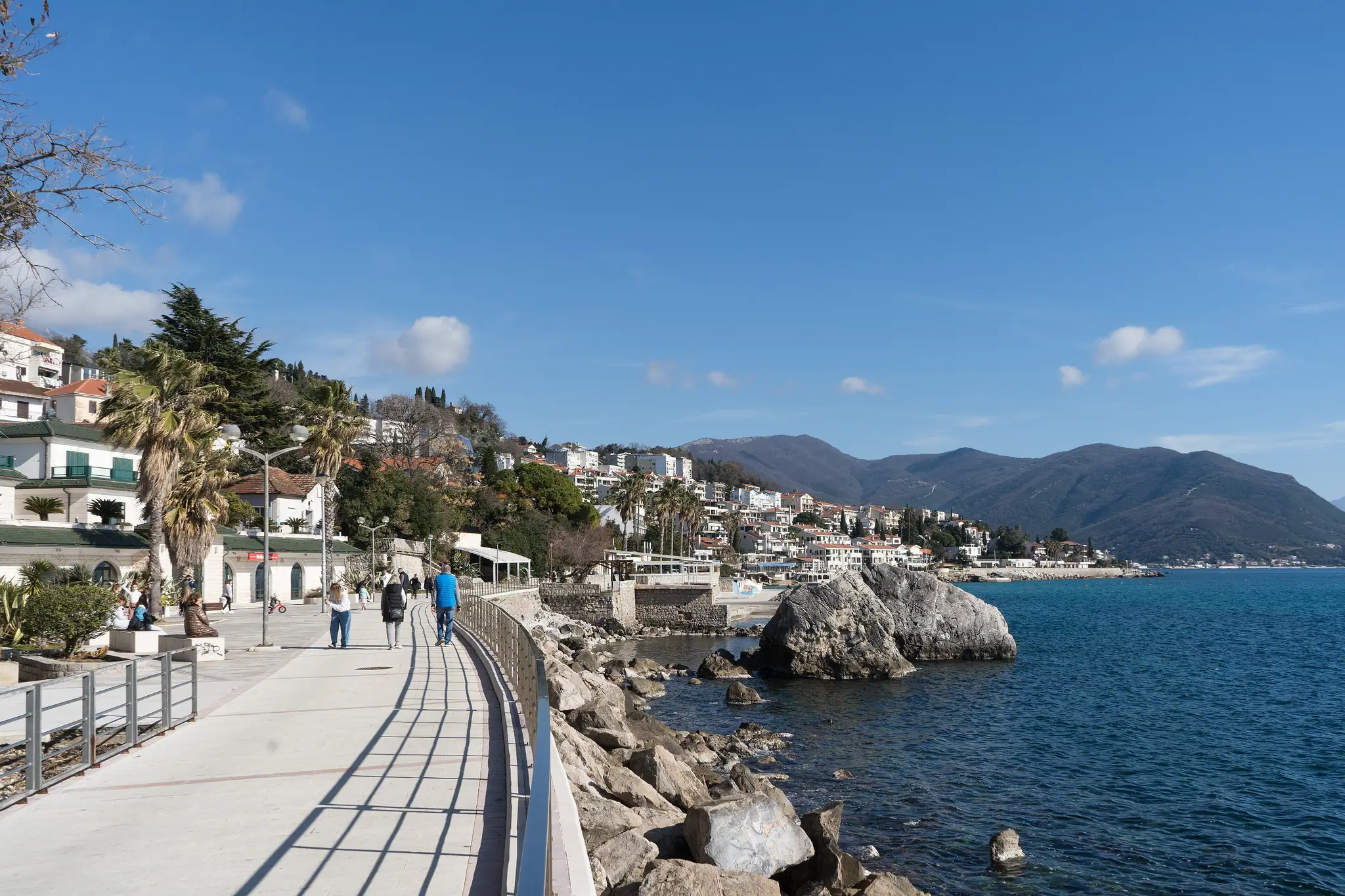
On the measures official bodies publish, Montenegro is a low-crime country with a few specific risks to plan for. The US State Department rates it Level 1, exercise normal precautions, and calls it a generally safe destination for travellers; the UK's travel advice reminds every visitor that no travel can be guaranteed safe. Police record far less theft and burglary per person than in western Europe. The risks that stand out are the roads, violence between organised crime groups, and the natural hazards of a seismically active country with a summer wildfire season.
What the official advice says
- United States. The State Department rates Montenegro Level 1, exercise normal precautions, the lowest of its four levels, in an advisory dated 27 August 2026. Croatia, Greece and Portugal carry the same level.
- United Kingdom. GOV.UK's advice, updated on 13 August 2026, says there is no recent history of terrorism in Montenegro, though attacks cannot be ruled out. Protests are mostly peaceful but can block main roads for several hours. Pickpockets work in tourist areas, on beaches, at airports and on public transport, and bank card fraud occurs, so use cash machines inside banks.
- The Global Peace Index. The 2026 index from the Institute for Economics and Peace, published in June 2026, ranked Montenegro 30th of 163 countries: behind Croatia (23rd) and Spain (27th), and ahead of Italy (35th), the United Kingdom (39th) and Greece (52nd).
Crime: what the police record
Eurostat collects police-recorded offences from European countries, Montenegro among them. Per 100,000 people in 2024:
| Offence | Montenegro | Croatia | Italy | Spain | Germany |
|---|---|---|---|---|---|
| Theft | 58 | 301 | 1,552 | 451 | 1,377 |
| Burglary | 51 | 187 | Not reported | 293 | 357 |
| Robbery | 5 | 20 | 50 | 130 | 52 |
| Intentional homicide | 1.9 | 1.0 | 0.6 | 0.7 | 0.8 |
Recorded crime depends on how often victims report it and how police count it, so read the table for its broad pattern rather than the exact gaps. On property the pattern is clear: Montenegro's police recorded about a fifth of Croatia's thefts per person, and a small fraction of Germany's or Italy's.
Homicide is the exception. Montenegro's rate of 1.9 per 100,000 in 2024 was higher than in any of the other four countries in the table, and it moves sharply from year to year: 3.4 in 2019, 0.8 in 2023. GOV.UK warns that violent incidents between organised criminal groups can affect bystanders nearby, and advises staying away from confrontations and following the authorities' advice.
For an owner, the everyday precautions are the ones you take at home. Lock up, keep valuables in a safe in a home you let, and watch your bag where summer crowds gather.
The roads: the main measurable risk
Road deaths are where Montenegro compares worst with the EU. Eurostat recorded 12.0 deaths per 100,000 people in 2024, against 4.4 across the EU, 6.2 in Croatia, 6.4 in Greece, 5.1 in Italy and 7.8 in Serbia. Monstat, the national statistics office, counted 6,831 traffic accidents in 2025, with 67 people killed and 3,179 injured. A third of the casualties, 1,090 of 3,246, fell between July and September.
GOV.UK rates the roads fair, and worse in rural areas, especially in winter. It singles out the two-lane Morača canyon road as dangerous when conditions are poor and traffic is heavy, and expects congestion on coastal roads and at border crossings in summer. The rules, from the RAC and GOV.UK:
- dipped headlights on day and night, all year;
- a drink-drive limit of 0.03%, less than half the limit in England and Wales;
- speed limits of 50 km/h in built-up areas, 80 km/h outside them and 100 km/h on expressways, with fines for driving even 10 km/h over;
- fines from EUR 20 to EUR 6,000, and excessive speeding can cost you your licence;
- winter tyres whenever weather conditions require them, and a warning triangle in the car.
Drive mountain roads in daylight in winter, hire a car with winter tyres for a winter stay, allow extra time on the coast in July and August, and use only licensed taxis, with the fare agreed before you set off. Flights and getting around covers the roads, tolls and ferries in detail.
Natural risks
Earthquakes. GOV.UK says Montenegro lies in a seismically active zone, small tremors are recorded throughout the year, and the last serious earthquake was in 1979; the Budva and Bar area guides describe what it did to both towns. For a buyer, the defence is the building. A building may be used only once a use permit has been issued after a technical inspection, so buy with the building permit and the use permit in order, ask how the structure was designed, and insure it against earthquake.
Wildfires. GOV.UK says wildfires are common from April to October. Call 112 if you see one, and never light a fire outside designated areas. If your house has a garden or land, clear dry vegetation and garden waste before summer, keep the access clear for fire engines, and check that your insurance covers fire.
Flooding. Floods can occur in winter and spring, when heavy rain and melting snow raise the rivers. Ask about the flood history of any low-lying plot, such as land on the Bojana river at Ada Bojana.
Snow and the mountains. In Kolašin and Žabljak, plan winter journeys around the weather and check the drive to the nearest hospital before you buy. Hikers have got lost after leaving marked paths, so take a charged phone and supplies, tell someone your route, and call 112 in an emergency.
The sea. Follow beach flags and lifeguards, watch for jellyfish, sea urchins and speedboats close to the shore in summer, and call 129 for an accident at sea.
Laws that catch visitors out
GOV.UK lists a few. You must carry identification at all times, and police can fine you if you do not. Illegal drugs, including cannabis, carry severe penalties, including long prison sentences. Photographing police or military installations, staff or vehicles is illegal. Same-sex couples are generally tolerated, but public displays of affection may attract negative attention. And every visitor must register their stay within 24 hours of arrival: see registration of stay.
Safety for a property owner
An owner's risks are as much legal and financial as physical. Seven precautions cover most of them:
- Check the title. Title insurance is generally not used in Montenegro, so your lawyer's checks are the safeguard. See title deeds and due diligence.
- Protect the payment. Pay only to an account in the name of the seller or developer named in the contract, confirm the account details by telephone before the first payment, and never act on an email that changes them. See sending money to Montenegro.
- Check the building. Ask for the building permit, the use permit and the structural design.
- Insure it. Cover the building against fire and natural risks, add contents and liability cover if you let, and tell the insurer if the home stands empty for long periods. See managing property from abroad.
- Prepare for summer. Clear dry vegetation around a house before the wildfire season.
- Arrange cover while you are away. Agree with a building manager or a key holder you trust to check the home after storms and through the summer.
- Save the numbers. 112 for any emergency and 129 at sea. Healthcare lists the direct numbers and the nearest hospitals.
Where you live is part of the answer too. The area matchmaker weighs quiet, family life and the other things that matter to you in every district, and moving to Montenegro sets out the first year in order.