Roads, airports, ports and planning rules decide how easily you reach a home and what can be built next to it. This is where Montenegro's main projects stood in November 2026, with their funding, their dates and what each could mean for property nearby. Anything not yet under contract is a plan, and several of these plans have slipped before.
The projects at a glance
| Project | Status | Cost | Funder | Dates | Area affected |
|---|---|---|---|---|---|
| Motorway, Podgorica to Mateševo, 42 km | Open | About EUR 20 million per km | - | July 2022 | Podgorica, Kolašin |
| Motorway, Mateševo to Andrijevica, 23 km | Under contract | EUR 693,969,668 | EBRD loan, EU grant, state budget | Signed February 2026; main works from mid-2027 | Kolašin, Andrijevica |
| Motorway, Andrijevica to Boljare, about 49 km | Preliminary design | About EUR 880 million, estimated | Not funded | Design contract early 2026 | Berane |
| Adriatic-Ionian motorway (A2) | Preliminary design, Zaljevo to Sukobin | EUR 2.8 billion, government concept | Not funded | Designer chosen March 2026 | Bar, Ulcinj |
| Budva bypass | Preparation | EUR 293 million, estimated | EU grant of EUR 42 million | Grant approved 2018 | Budva |
| Airport concession | Cancelled, pending Parliament | 300 million of investment proposed | None now | Cancelled July 2026 | Tivat, Podgorica |
| Railway, Bar to Vrbnica | Under way, delayed | EUR 405.6 million, estimated | EU grants, EIB | Line opened 1976 | Bar, Kolašin |
| Port of Bar upgrade | Preparation | EUR 69.0 million, estimated | EU grant expected, EIB | - | Bar |
| Kolašin gondola | Announced | EUR 101 million budgeted | Capital budget | Tender said in January 2026 to be weeks away | Kolašin |
| UAE agreement, Velika Plaža | Plans undecided | EUR 30 billion, as the prime minister put it | UAE investors | Agreement March 2025 | Ulcinj |
| Kotor building freeze | In force | - | - | Since March 2026 | Kotor |
| New coastal spatial plan | Decided | - | State | Decision 23 July 2026 | Six coastal municipalities |
The Bar-Boljare motorway
The Bar-Boljare motorway is planned to run about 169 km from the Port of Bar through Podgorica to the Serbian border at Boljare (WBIF). The EBRD calls it the largest infrastructure project in Montenegro and notes that more than 60% of the population lives within a 20 km-wide band along its corridor.
Open: Podgorica to Mateševo. The first 42 km, from Smokovac near Podgorica to Mateševo, has been in use since July 2022. China Road and Bridge Corporation built it, at about EUR 20 million per kilometre, N1 reported. From Mateševo, regional roads continue to Kolašin and to Andrijevica, under the government's 2026 classification of state roads.
Under contract: Mateševo to Andrijevica. Monteput, the state motorway company, chose a consortium of PowerChina, STECOL and PowerChina Chengdu in January 2026, after a tender run under EBRD rules. The design-and-build contract, worth EUR 693,969,668, was signed at the end of February 2026 and gives the builder five years. The 23 km section has 21 bridges and a tunnel under Trešnjevik (EBRD).
The money is in place. The EBRD approved a sovereign loan of up to EUR 200 million in July 2025, and the EU committed a grant of EUR 150 million, which the EU ambassador called the largest it has ever given Montenegro. The state budget pays the rest. The EBRD's project page puts the total cost at EUR 596.2 million, less than the contract signed in 2026.
Preparatory works began at Mateševo on 26 June 2026. Monteput's director said the main design would take about a year, that main works should start in mid-2027, and that Podgorica to Andrijevica will take less than 40 minutes once the section opens. Dates have slipped before: in March 2025 he expected the road to open in 2030.
Planned: the rest of the route. The 49 km from Andrijevica through Berane to Boljare has an approved environmental impact report and a preliminary design under way, at an earlier estimate of about EUR 880 million, eKapija reported in July 2026. An 18 km Podgorica bypass is in preparation (WBIF). The Commission's November 2026 report notes that detailed design for one remaining section, with EU money secured, has been pending for an extended period.
What it could mean. The motorway already reaches Mateševo, the turning for Kolašin, and the second section heads east towards Andrijevica. Faster roads can widen the area buyers consider, but the opening date is uncertain and the route beyond Andrijevica is not funded. Price a home in Kolašin on today's journey times, and treat a finished motorway as a possible gain. Kolašin Valleys and homes for sale in Kolašin show what is on offer.
The Adriatic-Ionian motorway and the coast road
In Montenegro, the Adriatic-Ionian corridor is the planned A2 motorway from the Bosnian border to the Albanian border. The Spatial Plan of Montenegro to 2040, adopted by Parliament on 26 June 2025, routes it inland: from the border near Nudo through Grahovo and Čevo to the Bar-Boljare motorway, along that road to Bar, then through Ulcinj to Sukobin, Biznis.rs reported. The coast gets an expressway in the plan, from Budva to the Croatian border.
The A2 is at the design stage. In March 2026 Monteput chose a consortium of Saobraćajni institut CIP and AG Institut to design the 23 km from Zaljevo, near Bar, to Sukobin, a 12-month contract worth EUR 2.2 million (eKapija). No construction money is committed. On 24 July 2026 Montenegro signed an agreement on strategic projects with the United States, which the Commission says Parliament ratified that month with exemptions from public procurement, taxes and customs. In August US companies were invited to express interest in the corridor, and the government's concept puts the motorway at 127 km and EUR 2.8 billion, Balkan Green Energy News reported.
The coast road was built in the 1960s through Herceg Novi, Budva and Bar, and its traffic doubles in the peak summer months (WBIF). In December 2018 the WBIF approved a EUR 42 million grant for a Budva bypass, 8.5 km of new motorway, at an estimated total cost of EUR 293 million. It still lists the project in preparation.
What it could mean. If the A2 is built, Ulcinj and Velika Plaža would sit on a motorway to Bar and Podgorica. On the Bay of Kotor and the Budva Riviera, summer traffic will remain until the bypasses are built, so allow for it when you judge a commute or a rental. Flights and getting around gives today's journey times.
Airports: more passengers, no concession
Podgorica and Tivat airports handled 3,085,675 passengers in 2025, 7.4% more than in 2024 (Monstat). In the third quarter of 2026 they handled 1,793,756, up 28.4% on a year earlier: 978,736 at Podgorica and 815,020 at Tivat. Wizz Air's base at Podgorica was due to open on 30 March 2026 with two aircraft, and the chief executive of Airports of Montenegro spoke of limited infrastructure capacity and of operating close to 24 hours a day.
In April 2026 the government proposed a 30-year concession for both airports to Incheon Airport Consortium, owned by the South Korean state. The concessionaire would renovate both terminals and build new ones, invest 300 million (132 million euros of it in the first three years) and pay the state 35% of gross revenue, RFE/RL reported. In July 2026 the government cancelled the call after the first-ranked bidder withdrew, a decision that still needs Parliament's approval (European Commission).
What it could mean. The new terminals were to come with the concession, which is now off. Tivat remains a summer airport, with 54,782 passengers in the first quarter of 2026 against 815,020 in the third. If you will fly often in winter, look at homes within reach of Podgorica, and compare Tivat with Podgorica.
The Bar to Belgrade railway
The Montenegrin section of the Bar to Belgrade line, from Bar to Vrbnica on the Serbian border, opened in 1976 and has had no major overhaul of its signalling, bridges or tunnels since (WBIF). The WBIF lists an EU-backed renewal worth an estimated EUR 405.6 million, EUR 188.3 million of it in grants, with the EIB as lead lender. The Commission's 2026 report says the work continued with a significant delay, that progress was limited on two investments covering about 60 km, and that procurement for the Bar to Golubovci section has still to be launched.
On 16 November 2026 one direct train a day left Bar at 20:10 and reached Belgrade at 07:08, after 10 hours 58 minutes (ŽPCG). In our view, rail is not yet a reason to buy anywhere: a station in Bar or Kolašin is a convenience, not a commute.
Ports and marinas
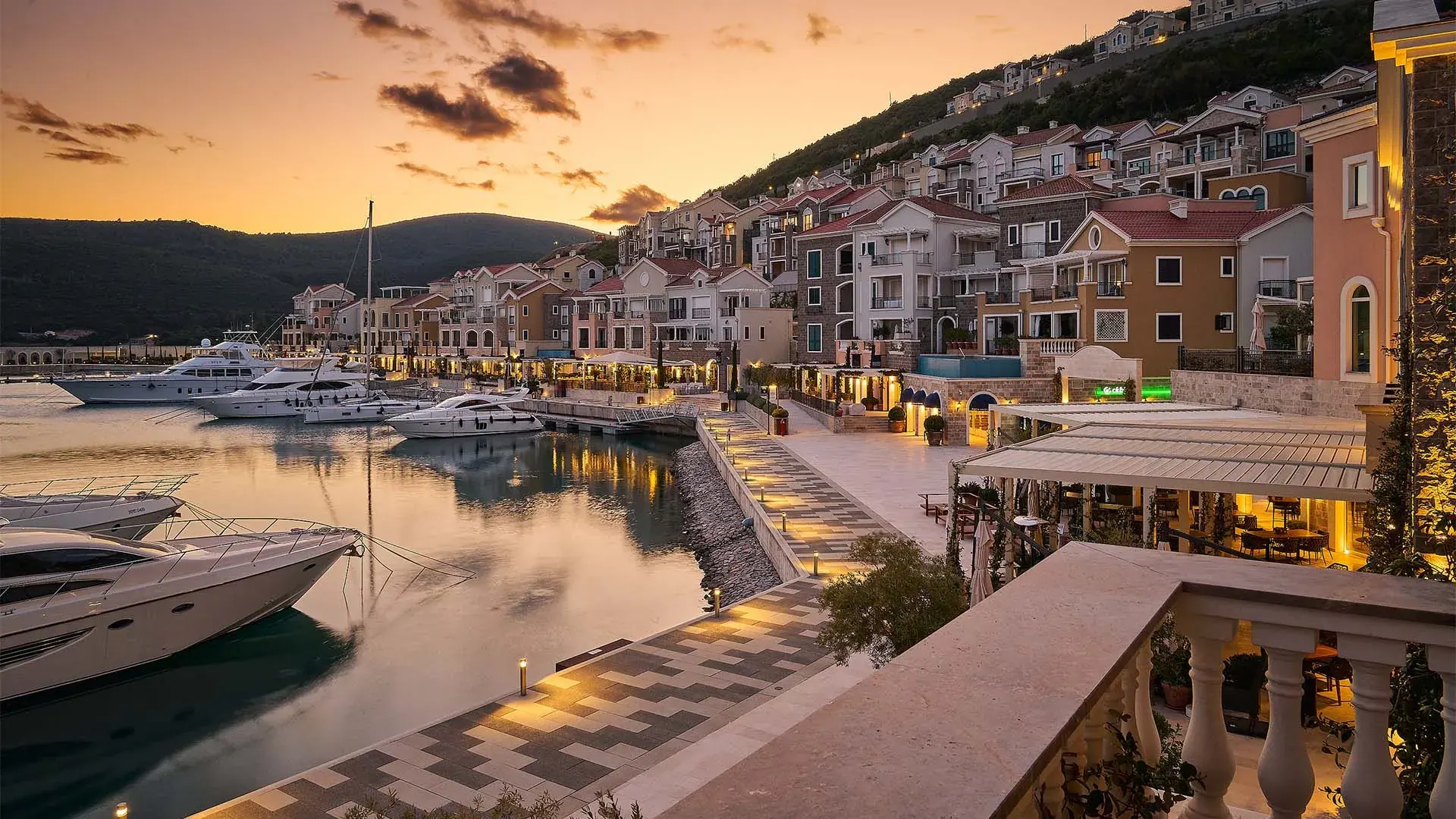
Porto Montenegro, Tivat. Porto Montenegro turned a derelict naval base into a yacht marina and waterfront district. The Investment Corporation of Dubai, the principal investment arm of the Government of Dubai, bought it in May 2016, when it had over 450 berths. The marina now lists 580 berths for yachts of up to 250 metres. See Porto Montenegro and Porto Montenegro vs Luštica Bay.
Portonovi, Herceg Novi. Portonovi's marina has 238 berths for yachts of up to 140 m, and the resort includes One&Only Portonovi, which the developer, Azmont Investments, describes as One&Only's first location in Europe. See Portonovi and Luštica Bay vs Portonovi.
The Port of Bar. Bar is Montenegro's main seaport and the southern end of the motorway and the railway (EBRD). Its upgrade is in preparation: the WBIF lists EUR 69.0 million of works, including dredging, a longer passenger terminal quay, a new power supply, a closed warehouse and a rebuilt rail approach, with an expected EU grant of EUR 32.5 million. Across Montenegro, 496 foreign cruise calls brought 630,236 passengers in 2025 (Monstat). In Bar, a working port is a neighbour to check: see what a flat overlooks before you buy.
Resort masterplans
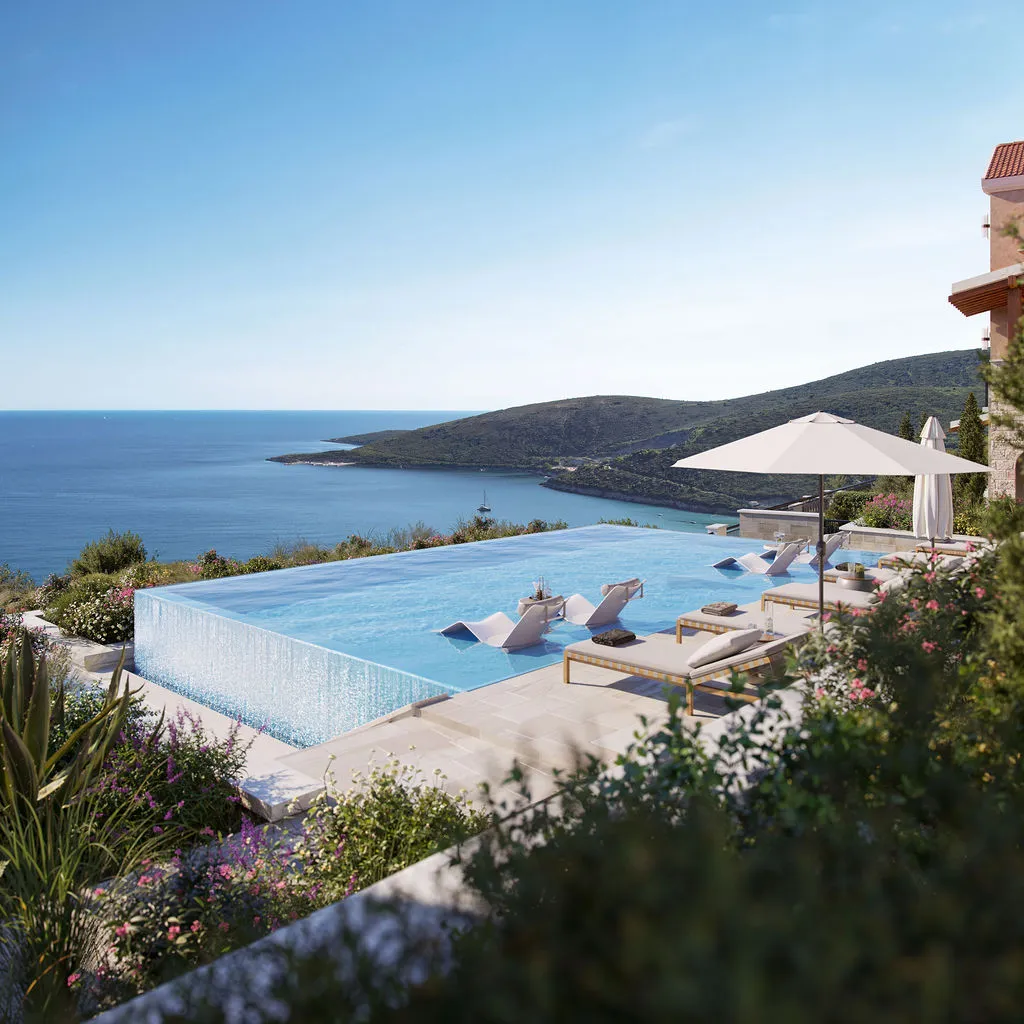
Luštica Bay. Orascom Development is building a resort town on the Luštica peninsula through Luštica Development, founded in 2008 as a joint venture of Orascom Development Holding (90%) and the Government of Montenegro (10%). The Chedi hotel and the marina opened in 2018, and the marina now has 115 berths for yachts of up to 45 m, with 28 more planned. The Gary Player golf course opens in phases on the developer's timeline: three holes since spring 2025, nine in 2026 to 2027 and 18 in 2028 to 2029. You are buying into a town still being built, so ask what is planned next to your home. See Luštica Bay and the homes we sell at The Peaks, Horizon, Centrale and Heights Residences.
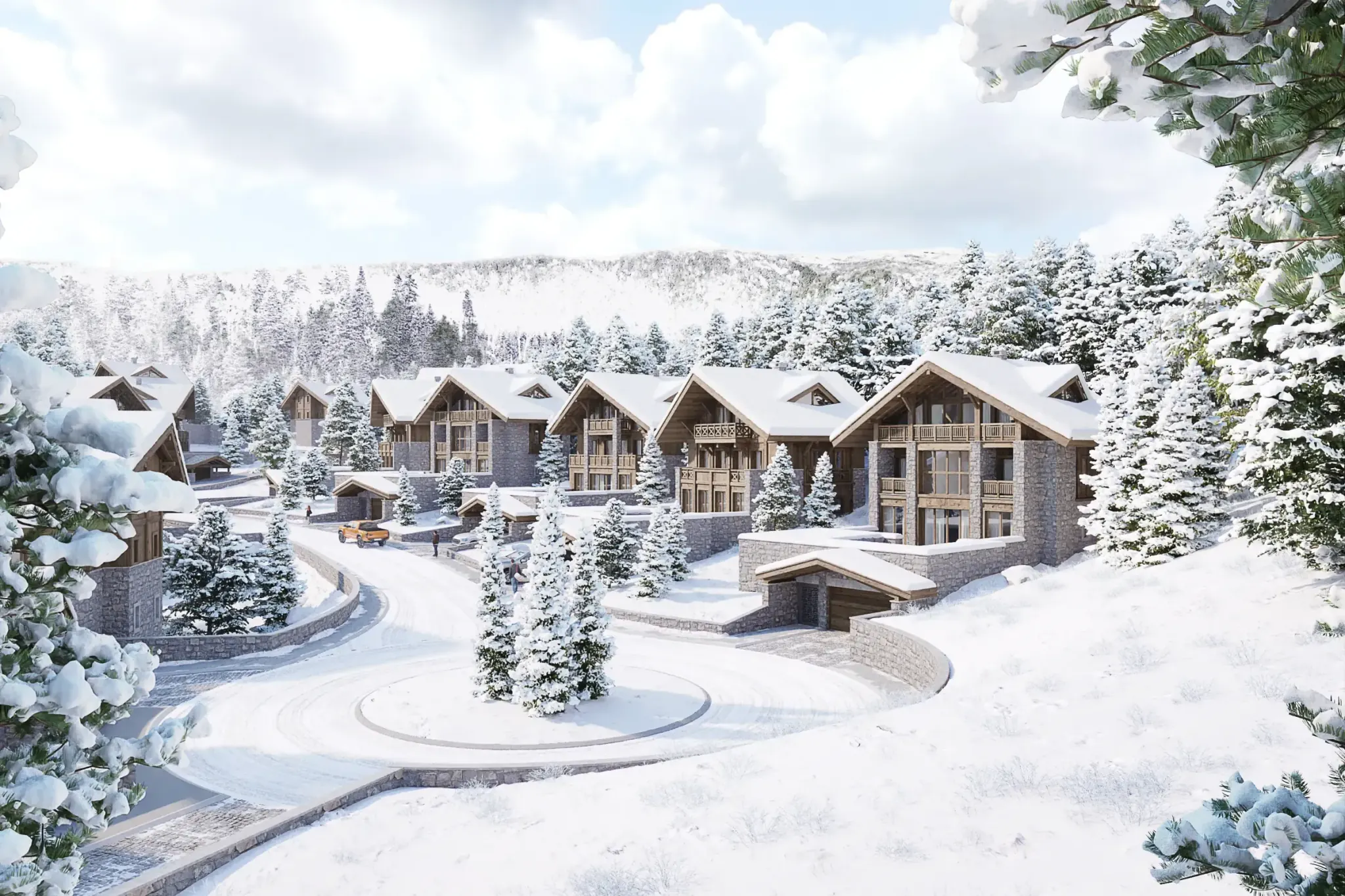
Kolašin. The state leased the Kolašin 1600 mountain centre for 90 years, from 23 December 2019, to a consortium of Gener 2 of Albania and a local company. The Montenegrin Investment Agency reported EUR 20.7 million invested by the end of 2023, when the first hotel, a Swissôtel, opened. Since February 2022 the K7 lift has linked Kolašin 1600 with Kolašin 1450, putting 45 km of slopes on one network. Next is a gondola from the town to both ski areas: in January 2026 the municipality's vice-president said the tender was weeks away, with EUR 101 million budgeted (eKapija). Treat it as a plan until a contract is signed. Homes at the resort are sold as Kolašin Valleys.
Žabljak. The Savin Kuk ski centre runs on old lifts. After a collision on the upper lift on 20 December 2025 killed a German tourist, Vijesti reported that a 2019 inspection had found a cable 30 years old, and an activist it quoted said a 2019 UNESCO opinion allowed a full rebuild of the existing lift but no extra lifts. Buy in Žabljak for the national park and the summers, count skiing as a bonus, and compare Kolašin and Žabljak.
The UAE agreement and Velika Plaža
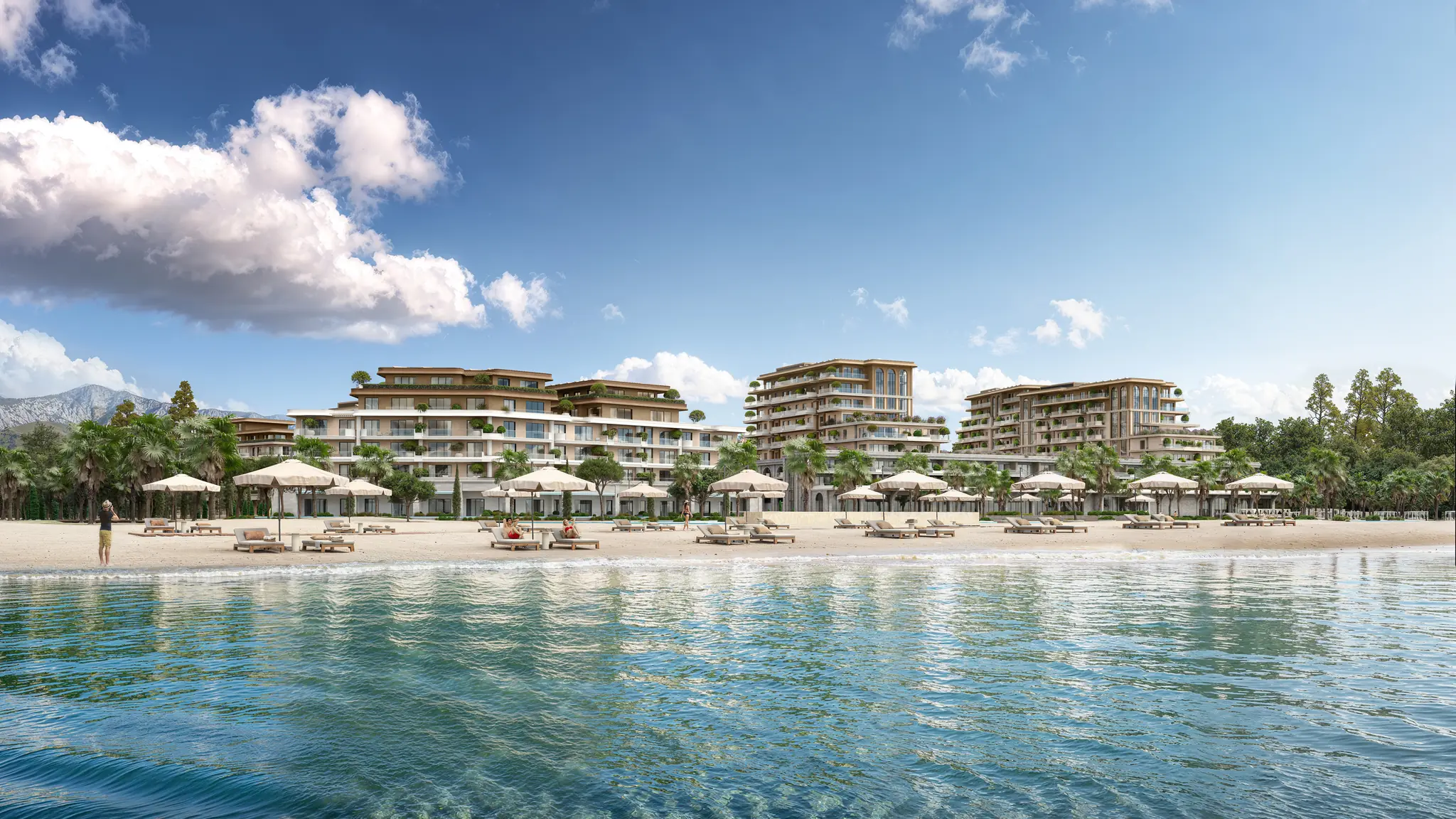
In March 2025 Montenegro concluded an Agreement on Cooperation in Tourism and Real Estate Development with the United Arab Emirates. It exempts contracts with UAE investors from both countries' public procurement laws, and the European Commission has told Montenegro to ensure that its implementation does not contravene or circumvent EU procurement rules. Parliament adopted the ratifying law on 23 April 2025, President Milatović returned it, and Parliament adopted it again on 3 June 2025. On 16 March 2026 the Constitutional Court lacked a majority to open a review of the law (RFE/RL).
The agreement was linked from the start to Velika Plaža, the 13 km beach at Ulcinj. Prime Minister Spajić put the investment at EUR 30 billion, with Mohamed Alabbar's Eagle Hills as the investor, RFE/RL reported. Alabbar's company then won nine bathing areas in a 2025 beach-lease tender and said it would withdraw, and in May 2025 he told Newsmax Balkans that he did not want to invest in the south of Montenegro at all. The government says any project will go through regular procedures, and Ulcinj's local authorities and civil society groups oppose the agreement.
What it could mean. The beach and the land behind it could be transformed by a large project or stay much as they are. Read the current spatial plan for any plot, and see Velika Plaža and Ulcinj.
Kotor: a building freeze in the protected area
In February 2026 Parliament amended the Law on the Protection of the Natural and Cultural-Historical Area of Kotor by urgent procedure, and the changes were in force by March (Boka News). Inside the protected area, no planning conditions or building permits are issued for new buildings. Across the whole municipality, every legalisation procedure is suspended. Public-interest works, infrastructure, reconstruction within a building's existing dimensions and restoration of cultural property may go ahead.
The freeze lasts until the government adopts a management plan for the area and a protection study is completed, due within 12 months, both with UNESCO's prior consent. In July 2026 UNESCO's World Heritage Committee, in decision 48 COM 7B.43, strongly urged Montenegro to keep the moratorium until the Heritage Protection Study and a revised Management Plan are complete and working, and asked for an updated report by 1 February 2027, Pobjeda reported.
What it could mean. Regeneration in Kotor now means restoring existing buildings, not adding new ones. Supply in the protected area is fixed while the freeze lasts, which protects views and character, but you cannot add a house or an extension, or legalise work done without a permit. Buy only with a building permit and a use permit. See Kotor, Kotor Old Town and illegal construction and legalisation.
The coastal spatial plan
The special purpose spatial plan for the coastal area, adopted by Parliament in July 2018, governs building along the coast to 2030. It covers Herceg Novi, Kotor, Tivat, Budva, Bar and Ulcinj, with 1,591 square kilometres of land and 2,540 of sea, and it sets the boundary of the public maritime domain (RTCG). Above it sits the Spatial Plan of Montenegro to 2040, adopted in June 2025.
On 23 July 2026 the government decided to prepare a new special purpose spatial plan for the coastal area, proposed by the Ministry of Spatial Planning, Urbanism and State Property. The plan that follows will shape what can be built near the shore for years.
What it could mean. The rules for what may rise next to a coastal home are being rewritten. Before you buy land, or a home whose value rests on its view, have a lawyer check the plan in force and ask the municipality about the new one. Buying land and building a house explains the planning documents.
What the projects mean for buyers
- The north is getting closer, slowly. The motorway to Andrijevica is funded, but main works start only in mid-2027.
- The airports are busier than their buildings, and the concession that was to bring new terminals is off.
- The coast keeps its summer traffic. The A2 runs inland, and the bypasses are still in preparation.
- Planning is moving. Kotor is frozen, Velika Plaža undecided, and the coastal plan is being redrawn.
In our view, price a home on what exists today and treat any project as a possible gain, not the reason to buy. Investing in Montenegro property weighs the whole case and its risks, and where to buy in Montenegro compares the towns.