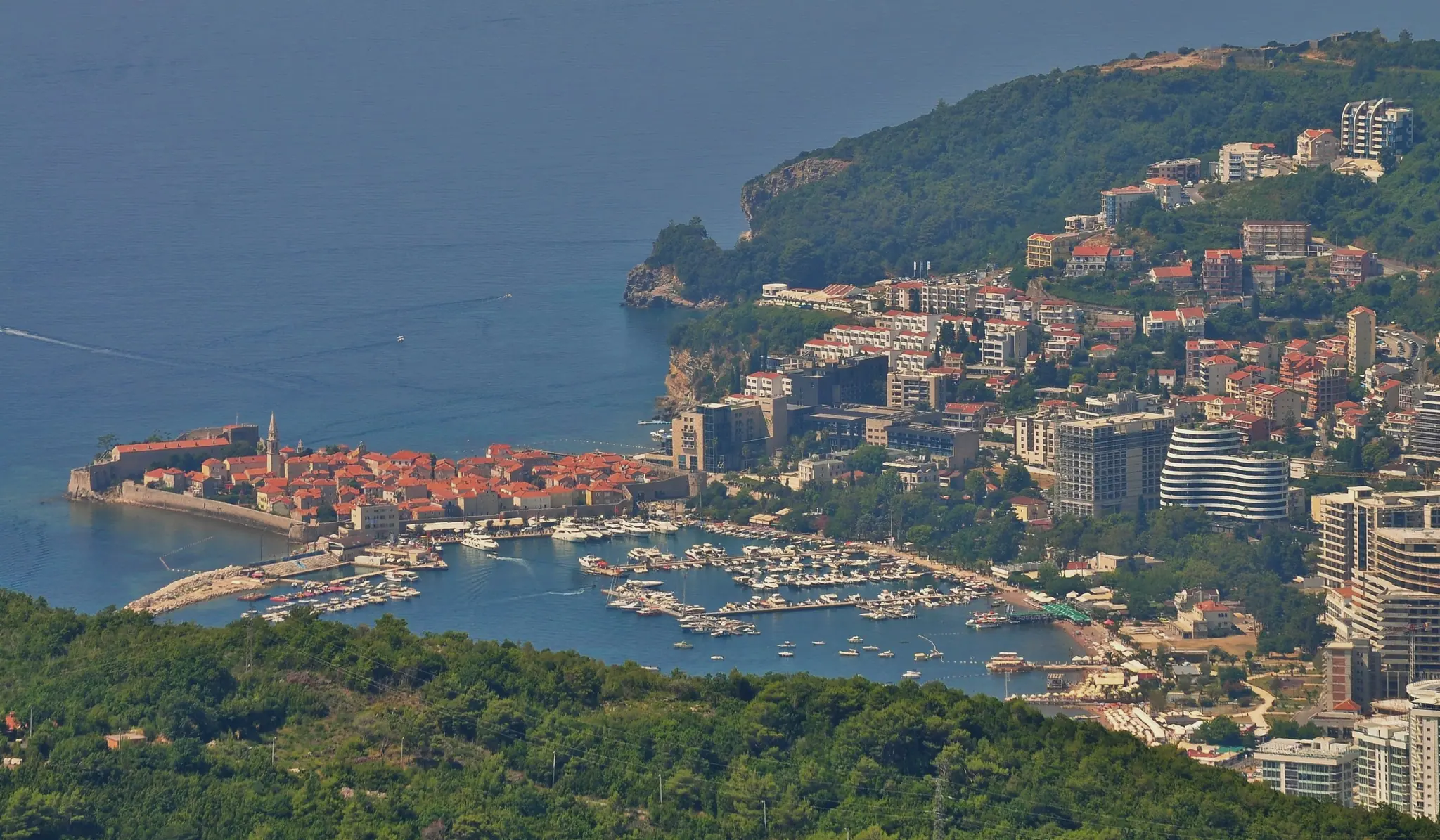
Letting a home to tourists in Montenegro is regulated as tourist accommodation, from a single apartment on a booking platform to a whole villa. Before the first guest arrives you need the property registered and categorised. During each stay you register the guests with the local tourist organisation and collect residence tax. After the season you declare the income. It is a large market: private accommodation recorded 10,179,395 overnight stays in 2025, 99.6% of them by foreign tourists, according to Monstat.
Before the first guest: registration and category
The rulebook made under Montenegro's Tourism and Hospitality Act classes rooms, apartments, houses and flats let to tourists as complementary hospitality facilities. To take paying guests, a property needs either a permit to operate in hospitality or a decision registering it in the Central Tourist Register.
The Ministry of Tourism's rulebook on hospitality facilities sets the types, the minimum standards and the category each property can reach:
| Type | Definition in the rulebook | Categories |
|---|---|---|
| Holiday rental room | Part of a residential building or a house in which tourists are accommodated | One to four stars |
| Holiday apartment | A living room, one or more bedrooms, a kitchen and a bathroom | One to five stars |
| Holiday apartment block | Five or more holiday apartments in the same building | One to five stars |
| Holiday rental house | A detached building with its own garden, let as one unit | One to five stars |
An application for a category comes with a checklist showing that the property meets the standards of the rating requested, and proof that the administrative fee has been paid. Ask your local tourist organisation where to file in your municipality; Budva's, for example, asks hosts for their decision on letting beds.
Check your building's house rules before you list: the owners' assembly governs the common parts your guests will use. In a resort, read the letting terms in your sale contract.
During each stay: guest registration
Every visitor must be registered with the local tourist organisation. The UK government's travel advice puts the deadline at 24 hours from arrival, with the local tourism office or the police, and says that in hotels and some holiday lets the owner must register the guest. Tivat's tourist organisation also sets 24 hours, and 12 hours when guests move on to another municipality. Budva's says hosts must register guests within 12 hours of arrival.
The registration form records each guest's name, sex, place, country and date of birth, citizenship and identity document, with the dates of arrival and departure. Tivat's tourist organisation offers a mobile app, Lotos Turist, for hosts to register guests digitally. See registration of stay.
Tourist tax: residence tax in Tivat and Budva
Each municipality sets its residence tax, the boravišna taksa. The host collects it at the same time as the accommodation charge and shows it separately on the bill.
| Guest | Tivat | Budva |
|---|---|---|
| Adult | EUR 1.00 per day | Up to EUR 1.00 a night |
| Aged 12 to 18 | EUR 0.50 | Half the adult rate |
| Under 12 | Exempt | Exempt |
Guests staying more than 30 days in a row are also exempt. In Tivat, owners who register their stay with their title sheet pay nothing, nor do their parents, children, brothers and sisters. Guests in Budva can also register and pay at the tourist organisation's information points.
After the season: tax on holiday-let income
Letting income is taxed at 15% as income from property. Where residence tax was paid, you may deduct a standard 50% of the rent without receipts, so the tax comes to 7.5% of the gross rent. Under a lease with a travel agency or local tourist organisation that achieves at least 60 days' average occupancy a year, the deduction is 70%. You file the annual return by the end of April, and a host with an approval to let to tourists must file it even in a year with no income.
There is no lump-sum income tax for private hosts: the flat-rate option for small businesses excludes hospitality and real estate activities. Booking platforms must report hosts and their fees to the Tax Administration by 31 January of the following year, and tell the host first. Above EUR 30,000 of turnover in 12 months you must register for VAT, and accommodation services then carry VAT at 15%. The detail is in rental income and tax.
The property
The letting
The costs and the tax
Net yield
5%
After costs and tax, on the price plus the costs of buying.
Gross yield
5.6%
Rent before costs, on the price alone.
Net rent a year
€17,400
What the rent leaves after every line below.
- Gross rent per yearEUR 120 a night at 45% occupancy
- €19,710
- Management0% of gross rent
- €0
- Service chargeEUR 0.00 per sqm a month on 70 sqm
- €0
- Running costs0% of gross rent
- €0
- Income tax and surtax15% of rent after the 30% standard deduction, plus 13% surtax
- −€2,339
- Net rent per year
- €17,371
Payback
Net rent repays the outlay in about 20 years, at these figures.
Not yet entered: a service charge, a management share, running costs. The net yield falls as you add them.
Estimates from your own inputs, not a forecast or a promise of income. The starting rate and occupancy are placeholders: enter the figures for the home you are considering. Letting to tourists needs registration with the municipality first, and foreign guests must be registered with the police. See the short-term rental rules.
Send me this breakdown
Your yield, line by line, by email. An adviser will check it against the rental figures a developer or operator publishes.
Email me the breakdown
Who the holiday-let guests are
Monstat's 2025 figures show where the demand for private accommodation lies: 94.8% of its overnight stays were in seaside resorts. By share of foreign guests' overnight stays, the main markets were Serbia (25.6%), Russia (22.1%), Bosnia and Herzegovina (9.4%), Turkey (4.9%), Ukraine (4.7%), Germany (3.9%), Kosovo (3.1%) and the United Kingdom (2.3%). See how demand changes through the year with the season explorer.
Long lets instead of holiday lets
A long let works differently. A tenant who stays more than 30 days in a row pays no residence tax, letting a home as permanent housing for more than 60 days is exempt from VAT, and the standard income tax deduction is 30% rather than 50%. Compare the two in rental income and tax.
A holiday-let host's checklist
- Read the building's house rules and, in a resort, the letting terms of your sale contract.
- Register with the Tax Administration for a tax number and, if you live abroad, appoint a tax proxy within ten days of buying.
- Obtain the permit or the Central Tourist Register decision, and the property's category.
- Set up guest registration with the local tourist organisation, using its app where one is offered.
- Collect residence tax on every booking and show it on the bill.
- Keep records of the rent and the costs, and file the annual return by the end of April.
If you will not be there to do this, a local manager can: see managing property from abroad. In a resort, a rental pool run by an operator does it for you: see resort and branded residences. For the income you can expect after these costs, see rental yields in Montenegro.