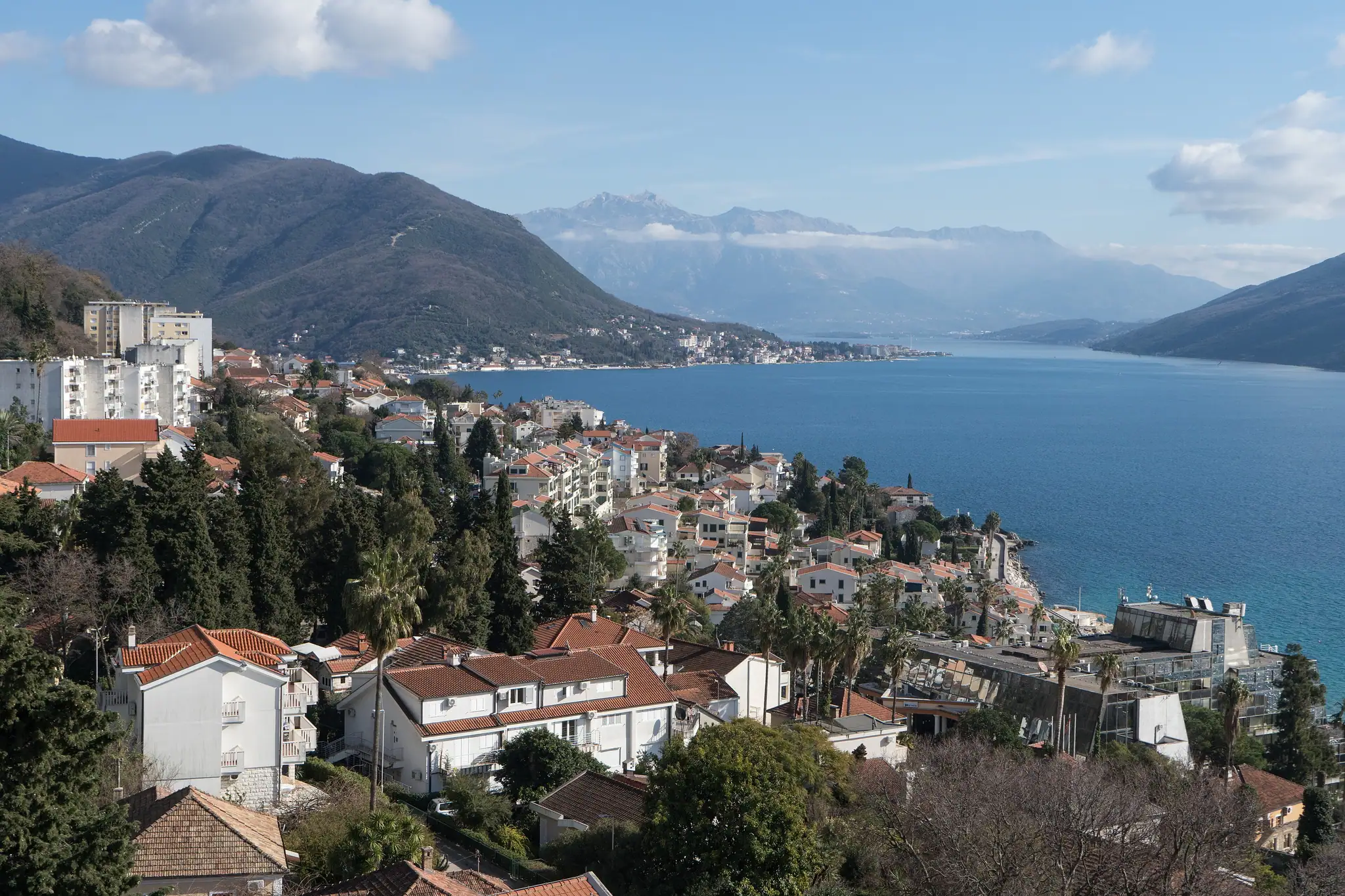
Montenegro and Croatia share a border on the Adriatic and both use the euro, and many buyers look at both. The difference that decides most cases is the buyer's passport. Croatia, as an EU member, is the simpler choice for EU and EEA buyers; for buyers from anywhere else, Montenegro is the easier place to own a home and to use it as a basis for residence. Prices, taxes and flights then narrow the choice.
Montenegro and Croatia at a glance
| Montenegro | Croatia | |
|---|---|---|
| EU and EEA buyers | Buy a home in their own name; farmland, forest, border areas and islands closed to all foreigners for now | Buy on the same terms as Croatians |
| Other foreign buyers | Buy a home in their own name, with the same limits | Prior consent of the Ministry of Justice and Public Administration, subject to reciprocity |
| Transfer tax on a resale | 3% to 6% in bands, on market value | 3% of market value |
| VAT on a new build | 21%, in place of transfer tax | 25%, in place of transfer tax |
| Annual property tax | 0.25% to 1% of market value; 0.3% to 1.5% for second homes | EUR 0.60 to EUR 8.00 per sqm of useful area |
| Tax on rent | 15%, after costs or a standard deduction | 12%, after a 30% lump-sum deduction |
| Residence through property | Temporary residence, from a EUR 150,000 tax base for non-EU buyers | Not a ground for temporary stay |
| New flats, average per sqm | EUR 2,557 (Q2 2026) | EUR 3,012 (first half of 2026) |
| EU status | Candidate; 23 of 33 chapters closed | Member |
Who can buy property in Montenegro and Croatia
Croatia. Citizens and companies of the EU and the EEA acquire real estate on the same conditions as Croatians. A buyer from outside the EU and the EEA, whether British, American, Turkish, Israeli or from the Gulf, needs the prior consent of the Ministry of Justice and Public Administration, requested by the buyer or the seller, and consent is given only where reciprocity exists between the buyer's country and Croatia. Without it the transaction has no legal effect. Agricultural land is closed to foreign buyers other than EU and EEA citizens.
Montenegro. Any foreign individual or company can own an apartment, a house or building land in its own name. The limits are by category, not nationality: agricultural land, forests, property within 1 km of the land border or on islands, and a few others, with a narrow exception for a house on up to 5,000 square metres of farmland. Montenegro has committed to lift those limits for EU citizens on accession. See can foreigners buy property in Montenegro?
Buying taxes: transfer tax and VAT compared
On the same EUR 500,000 price, before any other costs:
| Purchase | Montenegro | Croatia |
|---|---|---|
| New build from a developer | VAT at 21%: EUR 105,000; no transfer tax | VAT at 25%: EUR 125,000; no transfer tax |
| Resale | Transfer tax EUR 22,000 (4.4%) | Transfer tax EUR 15,000 (3%) |
Montenegro's bands are 3% up to EUR 150,000, then EUR 4,500 plus 5% of the amount above that, and EUR 22,000 plus 6% above EUR 500,000, so on a resale it is level with Croatia at EUR 150,000 and dearer above it. Croatia treats a building as new, and sells it with VAT, if it has not been used for more than two years. Neither country charges stamp duty. In Montenegro the notary's fee on a EUR 500,000 contract, with filing at the cadastre and VAT, comes to about EUR 1,008 under the tariff in force since April 2026.
The purchase cost calculator gives the Montenegrin total on any price, and international buying costs sets Montenegro against Croatia and other markets.
Annual property tax and holding costs
The two property taxes are built differently. Croatia charges EUR 0.60 to EUR 8.00 per square metre of useful area each year, so a 100 square metre flat pays EUR 60 to EUR 800. Montenegro charges a percentage of market value set by the municipality: 0.25% to 1%, or 0.3% to 1.5% for a home that is not your registered residence, which covers most holiday homes. On a flat valued at EUR 300,000, 0.5% would be EUR 1,500 a year. See annual property tax.
Service charges, utilities and insurance depend on the building in both countries.
Renting out: tax on rent in each country
Croatia taxes rent at 12% after a lump-sum deduction of 30%, and charges 13% VAT on holiday accommodation. Montenegro taxes rent at 15%, after documented costs or a standard deduction, and charges 15% VAT on accommodation once a host passes the EUR 30,000 registration threshold. Compare yields, not rates: see rental yields in Montenegro.
Residence through property: Montenegro yes, Croatia no
This is Montenegro's clearest advantage for non-EU buyers. Owning property is a ground for temporary residence; since 17 January 2026, applicants from outside the EU, the EEA and Switzerland must show a property tax base of at least EUR 150,000. Croatia's Aliens Act lists the purposes of temporary stay: family reunification, education and study, research, humanitarian reasons, life partnership, work, digital nomads and a few others. Owning property is not among them. Both countries offer a digital nomad permit; see digital nomad residence.
New-build prices per square metre
| Average price of new dwellings sold, per sqm | Period | EUR |
|---|---|---|
| Montenegro | Q2 2026 | 2,557 |
| Montenegro, coastal region | Q2 2026 | 2,838 |
| Podgorica | Q2 2026 | 2,510 |
| Croatia | First half 2026 | 3,012 |
| City of Zagreb | First half 2026 | 3,554 |
| Croatia, other settlements | First half 2026 | 2,766 |
Both statistical offices measure new homes sold under contract, not asking prices, and Croatia's figure excludes state-subsidised housing. Homes in Montenegro's resorts and old towns ask far more than these averages, as the area pages show. Montenegro's average rose 16.2% in the year to Q2 2026, Croatia's 8.9% in the year to the first half of 2026.
Flights to Montenegro and Croatia
On the Croatian side, Dubrovnik's airport passed three million passengers in 2026 by 15 October. Montenegro has two international airports, Podgorica and Tivat, which handled 1.79 million passengers between them in the third quarter of 2026, up 28.4% on a year earlier. See flights and getting around.
Montenegro or Croatia: our verdict
Choose Croatia if you hold an EU or EEA passport and want to buy inside the EU today, with no accession timetable to weigh.
Choose Montenegro if you come from outside the EU and EEA and want to own in your own name without a ministry's consent, if residence through property matters to you, or if you want the Bay of Kotor's marina resorts at lower average prices per square metre. Accept the considerations: transfer tax above EUR 150,000 is higher than Croatia's, EU membership is a target rather than a date, and title, permits and legalisation need careful checking. Read EU accession and property and where to buy in Montenegro next.
The price and the sale
The notary and your advisers
Total cost of buying
€851
An estimate: 0.2% of the agreed price, paid on top of it. VAT is already in the price.
- VAT21% on a developer's first sale, in place of transfer tax. Normally within the price: check the contract says so
- In the price
- Notary and cadastre registrationThe 2026 notary tariff for a contract of EUR 350,000, with 21% VAT and the fee to file the registration
- €851
- Price plus costs
- €350,851
In short
Plan for €350,851 in all. The price already carries about €60,700 of VAT, so a new build bought from the developer pays no transfer tax.
Rates reviewed on 15 November 2026. Transfer tax since 1 January 2024: 3% to EUR 150,000, 5% from there to EUR 500,000, and 6% above, on the market value. The notary figure follows the notary tariff in force from 9 April 2026; the cadastre’s own registration fee is nominal and not included. Your lawyer’s and any agent’s fees are your own quotes. An estimate, not a quotation. See VAT or transfer tax on new builds and property taxes and buying costs.
Send me this breakdown
Your figures by email, and an adviser to check them against the contract of a real development.